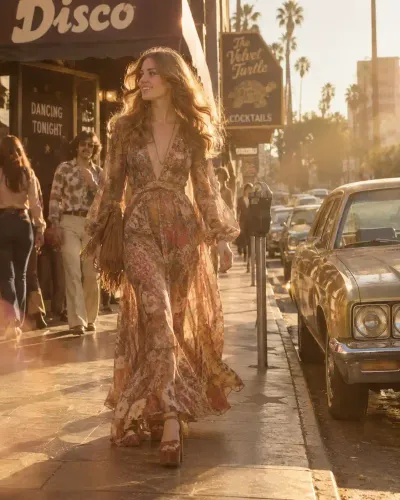
The 1970s
1970–1979
From bohemian maxi dresses to disco and the first stirrings of punk - the decade fashion stopped agreeing on a single silhouette.
Silhouettes
-
Hot Pants and the Micro Silhouette
The very short, tightly tailored counter-trend to the maxi dress - a genuine fad that burned hot and fast before all but disappearing by 1972.
-
The Annie Hall Silhouette
Oversized menswear on a woman's body - vests, ties, wide-leg trousers, and wide-brim hats - named for the 1977 film but adopted well beyond it as real street style.
-
The Bohemian/Prairie Silhouette
A loose, flowing, floor-grazing shape that carried late-60s hippie dressing straight into the mainstream - peasant blouses, gathered waists, and a lot of unstructured layering.
-
The Disco Silhouette
Body-conscious, bias-cut, and built to move - clinging jersey, bare shoulders, and metallic shine designed specifically for a night on a lit dance floor.
-
The Punk Silhouette
Torn, safety-pinned, and deliberately deconstructed - bondage-influenced pieces out of London's mid-70s scene that turned falling apart into the whole point.
-
The Wrap Silhouette
A soft, body-skimming shape built around a tied closure instead of a zipper - easy to wear, flattering across body types, and the decade's biggest commercial fashion story.
Designers
-
Diane von Furstenberg
The designer behind the printed jersey wrap dress - a single garment that became a genuine commercial phenomenon and one of the decade's rare woman-led ready-to-wear success stories.
-
Halston
American minimalism at its most confident - bias-cut jersey and Ultrasuede, worn by the Studio 54 crowd he designed for and partied alongside.
-
Laura Ashley
Romantic Victorian-revival prints and high necklines out of a Welsh cottage industry - a genuinely different register from London's mod and punk scenes, and just as commercially huge by decade's end.
-
Sonia Rykiel
Nicknamed 'the Queen of Knits' - a French designer who turned unlined, deliberately unfinished sweater-knit dressing into a genuine signature, stripes and all.
-
Vivienne Westwood
Punk's visual language didn't just influence her - she and Malcolm McLaren built most of it, out of one shop on the King's Road, before it was a fashion movement at all.
-
Yves Saint Laurent
The couturier who spent the decade blurring menswear into womenswear and couture into ready-to-wear - and whose influence shows up as much on the street as on any runway.
-
Zandra Rhodes
A textile designer first and a couturier second - and the person who put safety pins and ripped jersey on a runway before punk was widely treated as fashion at all.
Garments
-
Bell-Bottoms
Flared-leg trousers that moved from naval uniform to hippie signifier to full mainstream denim staple, worn by pretty much everyone by mid-decade.
-
Hot Pants
Short, tightly tailored shorts that briefly rivaled the maxi for headlines - a fast, intense fad that burned out almost as quickly as it caught on.
-
Platform Shoes
Exaggerated thick soles and heels adopted by men and women alike - part glam-rock statement, part genuinely practical answer to floor-length hems.
-
The Halter Top
A tie-neck, bare-shouldered top built for movement on the dance floor - and a real construction break from decades of built-in bra structure.
-
The Jumpsuit
Trousers and a top built as one continuous garment, no waist seam breaking up the silhouette at all - a single piece that could carry a woman from a disco floor to a dinner reservation without a second thought.
-
The Maxi Dress
The full-length dress that outlasted the midi's disastrous launch and the mini's dominance both, moving from boho staple to genuine eveningwear by mid-decade.
-
The Peasant Blouse
A loose, full-sleeved blouse borrowing from Eastern European and Mexican folk dress - the boho staple that anchored countless early-70s outfits.
-
The Wrap Dress
A printed jersey dress that ties shut instead of zipping - deceptively simple construction that became one of the decade's genuine commercial phenomena.
Fabrics & Textiles
-
Cheesecloth and Gauze
A cheap, loosely woven cotton meant for straining curds became, almost by accident, the signature fabric of early-70s boho dressing.
-
Corduroy
A ridged cotton-pile fabric that reads as sturdy and unpretentious rather than fashionable in any flashy sense - exactly the earthy, practical texture the decade's back-to-nature instinct kept reaching for.
-
Denim
The decade denim finally stopped being just workwear and youth rebellion and became something designers were willing to put their own name on.
-
Jersey
The knit fabric behind the decade's whole shift away from structured tailoring - and the literal material of both the wrap dress and Halston's gowns.
-
Lurex and Metallic Fabrics
The fabric literally engineered to catch a spotlight - metallic thread knits that made disco's body-conscious dressing shine under the lights.
-
Polyester and Double Knit
The decade's most mocked-in-hindsight fabric was also its most genuinely liberating - wash-and-wear synthetics that freed working women from the ironing board.
-
Suede and Fringe
Fringed suede jackets and vests turned a frontier-and-rock-stage material into the era's shorthand for 'natural,' unpretentious dressing.
Construction & Fit
-
Closures: Snaps and Zips in Unstructured Clothing
As garments loosened and knits got stretchier, closures got simpler too - snaps, minimal zips, and self-ties replacing the heavy boned-and-zipped fastenings of the 1950s.
-
Elastic Waistbands and Easy-Care Construction
Comfort becomes a real ready-to-wear selling point - elasticized waists, pull-on construction, and a shift away from fitted waistbands built around a zipper and a hook-and-eye.
-
Patchwork and Home-Sewing Culture
Home sewing hits its commercial peak just as patchwork, appliqué, and visible mending become a deliberate aesthetic statement rather than a sign of thrift.
-
Separates and Mix-and-Match Construction
Ready-to-wear pattern design shifts toward genuinely interchangeable pieces - blazers, vests, trousers, and skirts drafted and dyed to coordinate rather than sold as a single fixed outfit.
-
The Bias Cut Revival
A 1930s draping technique comes back for disco - cutting fabric on the diagonal grain so jersey clings and pours over the body without a single dart.
-
The Decline of Foundation Garments
The real construction consequence of 'natural' dressing - garments cut to be worn with minimal or no structured underpinning, a genuine break from decades of built-in boning and shaping.
Culture & Context
-
Ethnic and Global Influences
Caftans, ikat, and 'peasant' prints drew real fascination with non-Western dress into the mainstream wardrobe - alongside a genuine, worth-naming pattern of flattening specific cultural garments into a vague marketing category.
-
Punk Rock and Anti-Fashion
London punk set out to reject the fashion industry outright - safety pins and ripped fabric as genuine refusal - and then watched that refusal get absorbed and resold within a couple of years.
-
Second-Wave Feminism and Dressing for Work
As real numbers of women moved into white-collar offices through the decade, what to actually wear there became a genuine, anxious, well-documented question - not just a style choice.
-
Studio 54 and Disco Culture
The club that opened in April 1977 didn't invent disco fashion, but it concentrated it into a single, photographed, endlessly imitated dress code that reached far past Manhattan.
-
The Back-to-Nature Movement
Growing environmental awareness - the first Earth Day among its clearest markers - pushed fashion toward natural fibers, earthy palettes, and homemade clothing as an actual values statement.
-
The Energy Crisis and Fashion
The 1973 oil embargo made petroleum-derived synthetics more expensive almost overnight, and a decade already leaning on polyester had to reckon with what that actually meant.
-
The Midi Skirt Backlash
The fashion industry tried to declare the calf-length midi the mini's official successor in 1970 - and a genuine consumer revolt is the reason that never actually happened.