The 1970s early-to-mid 1970s
Corduroy
A ridged cotton-pile fabric that reads as sturdy and unpretentious rather than fashionable in any flashy sense - exactly the earthy, practical texture the decade's back-to-nature instinct kept reaching for.
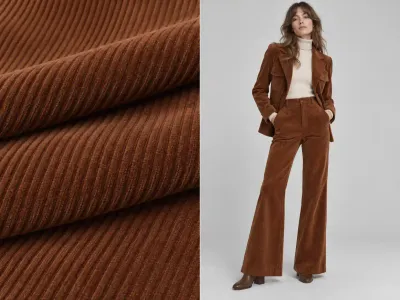
Corduroy is woven with distinct vertical ridges, called wales, formed by extra weft yarns that get cut and brushed up into a soft pile running in continuous rows down the fabric's length. That ridged texture gives it a genuinely different visual and tactile character than a plain woven cotton or wool - sturdier-looking, more textured, with an unmistakable soft-brushed surface that reads as durable and unpretentious rather than polished or refined in the way a smooth wool suiting fabric does.
That earthy, practical read is exactly why corduroy fits so naturally alongside this decade's bohemian-prairie silhouette and the wider back-to-nature movement running through its early years - corduroy trousers, skirts, and jackets carried none of the polish associated with the previous decades' more formal tailoring fabrics, and its natural-cotton origins fit comfortably alongside the same instinct favoring cheesecloth and other unfussy natural fibers over synthetic alternatives. It's worth noting the fabric crossed gender lines more freely than most other fashion textiles this decade - corduroy suits, jackets, and trousers were genuinely popular in both men's and women's wardrobes simultaneously, which wasn't true of most of this section's other fabric entries.
I think corduroy earns its place here as a useful counterweight to the decade's louder, shinier fabric stories - lurex and polyester double-knit get a lot of deserved attention for defining this era's more dramatic visual moments, but corduroy's quiet, textured, genuinely comfortable practicality was just as much a part of how ordinary people actually dressed through these years, running in parallel to the decade's flashier fabric stories rather than competing with them directly.