The 1970s late 1970s
Lurex and Metallic Fabrics
The fabric literally engineered to catch a spotlight - metallic thread knits that made disco's body-conscious dressing shine under the lights.
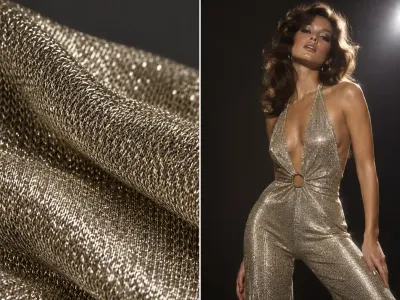
Lurex is technically a brand name - a metallic yarn, usually a thin aluminum or metallic-coated polyester film, woven or knitted alongside a conventional fiber - but by the back half of the '70s it had become the generic term for basically any fabric with that woven-in shine, the same way "Kleenex" swallowed the word tissue. That genericization tells you something about how thoroughly it saturated eveningwear through the disco years specifically.
What made Lurex the right fabric for this exact moment, rather than just a novelty, was the venue it was designed for: a dance floor lit by a mirror ball and strobe lights, where a matte fabric simply disappeared into the dark and a metallic-thread knit caught and threw light with every movement. It also had to move with the body, since disco dressing was built around dancing rather than standing still, which is why Lurex shows up almost exclusively knitted into stretch jersey blends rather than woven into rigid fabric - the same practical logic that made jersey the era's dominant fabric generally, just with metallic thread worked through it for the specific job of being seen under club lighting. Halter necklines, wrap tops, and body-skimming gowns built for the disco silhouette leaned on Lurex knits constantly through 1977-79, right alongside sequins and rhinestone embellishment doing similar light-catching work by different means.
None of this happens in a vacuum outside Studio 54 and the disco scene it was built to dress for - the club opened in April 1977 and almost immediately became the place a metallic-knit dress was actually meant to be worn, photographed, and recognized. I think that's what makes Lurex worth a standalone entry rather than just a footnote under sequins: it's a fabric whose entire design logic only makes sense once you picture the specific room, the specific lighting, and the specific kind of moving-body dressing disco demanded. Take the mirror ball away and a lot of the fabric's whole reason for existing goes with it.