The 1970s mid-to-late 1970s
Jersey
The knit fabric behind the decade's whole shift away from structured tailoring - and the literal material of both the wrap dress and Halston's gowns.
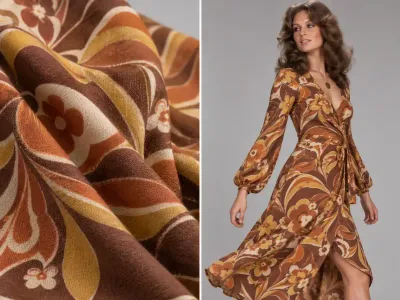
If I had to name one fabric that explains the whole shape of mid-to-late-70s fashion, I'd pick jersey without much hesitation. It's a plain-knit fabric - can be cotton, wool, silk, or synthetic, but by this decade increasingly a printed polyester or rayon blend - with real stretch and, crucially, real drape, meaning it falls and clings along the body's actual lines instead of holding a shape imposed on it by boning, interfacing, or a stiff hand. That single property is basically the whole story of why structured tailoring lost ground through these years.
Jersey isn't new to the '70s - it's been a staple fabric since Coco Chanel first legitimized it for daywear back in the 1910s - but this decade is when it moves decisively into eveningwear and even semi-formal workwear, a register it had rarely occupied before. Diane von Furstenberg built her entire 1974 wrap dress around a printed jersey specifically because it needed no zipper, no boning, and no fitted seaming to look put-together - the fabric's own cling and recovery did that work, which is a large part of why the wrap dress fit such a wide range of bodies straight off the rack. At the more overtly glamorous end of the same decade, Halston built his reputation on bias-cut jersey caftans and columnar gowns that depended entirely on the fabric's drape to read as effortless rather than undone - the same underlying textile doing very different cultural jobs depending on who was cutting it.
What ties both of those together, and really the whole decade's relationship to jersey, is a genuine rejection of the built structure that had defined womenswear for most of the century before it - no more boned bodices or heavily interfaced bodices standing in for the body's own shape, just a knit that moved with the wearer instead of around her. I think that's worth calling a real construction shift rather than just a trend: once a fabric this forgiving and this widely embraced existed at scale, there was genuinely less reason to build a dress the old way, and a lot of the era's bias-cut construction only really works because jersey was there to be cut that way in the first place.