The 1930s throughout the 1930s
Lamé and Metallic Fabrics
Fabrics woven or knitted with metallic threads in gold and silver - the Art Deco era's most dazzling evening material, and a Hollywood favourite for catching studio light.
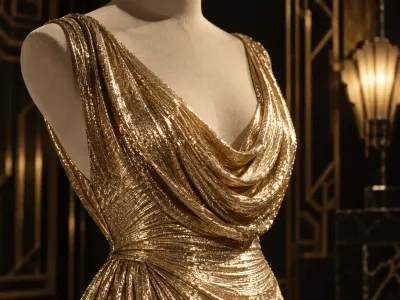
Lamé is fabric woven with metallic threads - traditionally thin strips of metal or metal-wrapped yarn in gold or silver, combined with silk or, increasingly, rayon. The result is a fabric that shimmers and glints, and in the 1930s it was one of the most glamorous evening materials you could wear. If satin is the soft glow of the decade, lamé is its sparkle.
It suited the 1930s particularly well because of the decade's love of Art Deco - the geometric, streamlined, machine-age style that shaped architecture, furniture, and graphic design as well as fashion. Metallic surfaces were everywhere in Art Deco, from chrome and silver fittings to gilded cinema interiors, and a gold or silver lamé gown fitted right into that world. It was used for evening gowns, jackets, and wraps, and for accessories like evening bags, shoes, and turbans. It was also frequently combined with the bias cut, though lamé is stiffer than satin and doesn't drape quite as fluidly.
Hollywood loved it. Under studio lights, lamé flashed and sparkled on screen, and costume designers like Adrian used it for their most dramatic star moments - it's hard to think of an image more "1930s movie star" than a woman in a slinky metallic gown, as the Hollywood glamour entry explores. I find lamé an interesting contrast to the Depression realities of the decade: at a time when many people could barely afford a cotton dress, gold and silver fabric on the cinema screen offered a kind of shared escapism, a glimpse of a glittering world most viewers would never see in person.