The 1930s early-to-mid 1930s
The Bias-Cut Evening Silhouette
The long, liquid, body-skimming evening gown cut on the diagonal of the fabric - the defining glamour silhouette of the decade, from Paris couture to the Hollywood screen.
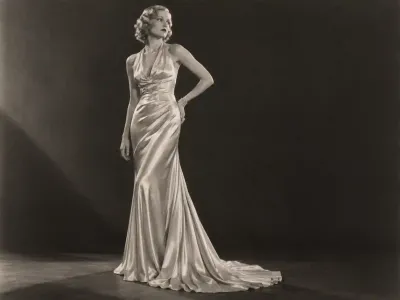
If you had to pick one image to stand for the 1930s, it would probably be a woman in a long, pale satin gown that seems to pour over her body like liquid, clinging at the hips and pooling at the floor. That's the bias-cut evening silhouette, and it's the most distinctive shape of the decade - so distinctive that people still describe any slinky satin slip dress as "very thirties."
The effect comes from how the fabric is cut. Cloth cut on the bias, at 45 degrees to the straight grain, stretches and drapes in a way that cloth cut straight simply doesn't: it follows the curves of the body, swings as the wearer moves, and falls into soft, fluid folds. Madeleine Vionnet had been developing the technique since the 1920s, and by the early 1930s it had become the dominant approach to evening wear - covered in more technical depth in the bias cut construction entry. The ideal gown was long and lean, often with a cowl or halter neckline, a dramatically low back, and a hem that flared into a small train.
Hollywood took the silhouette and made it iconic. Jean Harlow's white satin gowns, designed by Adrian - especially in Dinner at Eight (1933) - are probably the purest example, and on black-and-white film, silk satin and lamé caught the studio light like nothing else. What I find fascinating about this silhouette is how unforgiving it is. A bias-cut satin gown hides nothing - no boning, no structure, just fabric and body - which is a big part of why foundation garments changed so much in the same decade. It's the most beautiful and the most demanding shape the 1930s produced.