The 1930s mid-to-late 1930s
The Broad-Shoulder Silhouette
Widened, padded, and puffed shoulders over narrow hips - an inverted-triangle line pushed by Schiaparelli in Paris and Adrian in Hollywood, and the direct ancestor of the 1940s square shoulder.
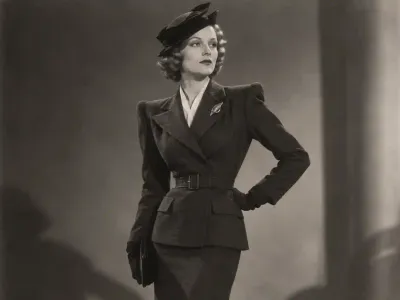
The broad shoulder is usually associated with the 1940s, and the war certainly made it universal - see the 1940s shoulder pad entry - but it was born in the 1930s. By the middle of this decade, fashionable women's clothes were visibly widening at the shoulder and narrowing at the hip, creating an inverted-triangle line that looks very different from the soft, sloping shoulders of the decade's opening years.
Two designers usually get the credit. In Paris, Elsa Schiaparelli built padded, squared shoulders into her tailored suits and jackets from the early 1930s, giving them a crisp, almost architectural edge. In Hollywood, Adrian widened Joan Crawford's shoulders - most famously with the enormous ruffled sleeves of the white organdy gown in Letty Lynton (1932) - and her screen image made the look desirable to millions of women. Whether the padding came from structure, ruffles, puffed sleeves, or epaulette-like details, the effect was the same: a strong shoulder that made the waist and hips look narrower by contrast.
I think the most interesting thing about the broad-shoulder silhouette in the 1930s is that it arrives before it's needed. In the 1940s, the square shoulder is partly a practical answer to fabric rationing - a way to get presence without yardage. In the 1930s, it's pure fashion: a bolder, more confident way of standing that reads as modern and a bit assertive after the soft, fluid lines of the bias-cut era. By the end of the decade, it had merged with a newly nipped waist into the 1939 silhouette, which is the shape the war then froze in place for years.