The 1930s throughout the 1930s
Hollywood Glamour and the Silver Screen
In the golden age of the studio system, film costume designers became the most influential fashion voices in America - and department stores sold copies of what the stars wore.
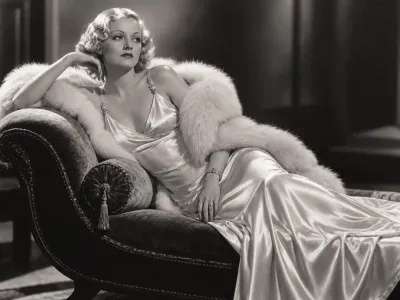
The 1930s were the golden age of the Hollywood studio system, and for millions of people, the cinema was where they saw fashion. Many Americans went to the movies every week, even during the Depression, and what they saw on screen shaped what they wanted to wear far more than anything shown in Paris. In a real sense, studio costume designers became the most influential fashion designers in the country.
The big names were Adrian at MGM, Travis Banton at Paramount, Orry-Kelly at Warner Bros., and Walter Plunkett at RKO, with Edith Head rising at Paramount through the decade. Each studio had its own look, and each star had her own style: Jean Harlow's slinky white satin, Marlene Dietrich's feathers and trousers, Joan Crawford's broad shoulders, Greta Garbo's tilted hats. The studios understood the commercial power of this, and so did retailers. From 1930, "cinema shops" in department stores - starting with Macy's in New York - sold licensed copies of costumes from current films, so women could buy a version of a star's dress soon after seeing it on screen.
The screen also shaped fashion in less obvious ways. Black-and-white film rewarded texture and sheen, which is part of why lamé, satin, sequins, and feathers were so popular. And from 1934, stricter enforcement of the Production Code - Hollywood's self-censorship rules - put limits on how much skin and cleavage could be shown, which pushed designers toward the covered-front, bare-back glamour that feels so typical of the decade. I think Hollywood is the key to understanding 1930s fashion: it's where Paris ideas, American mass production, and a public hungry for escape all met.