The 1930s throughout the 1930s
The Backless Evening Gown
A long evening gown cut away to the waist at the back - the 1930s' boldest piece of glamour, shifting fashion's focus from the legs of the 1920s to a bare, suntanned back.
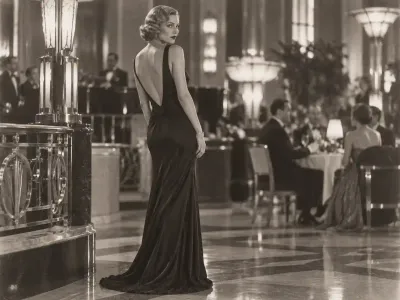
In the 1920s, the fashionable focus was on the legs - short hemlines were the scandal of the decade. When hemlines dropped back to the floor for evening in the 1930s, that attention needed somewhere else to go, and it went to the back. The backless evening gown, cut in a deep V, U, or scoop that could reach right down to the waist, is one of the defining garments of the decade.
From the front, many of these gowns look quite modest - a high neckline, perhaps a halter or cowl, and a long, fluid skirt. Then the wearer turns around. That reveal is the whole point, and it's a very 1930s kind of glamour: sophisticated and dramatic rather than simply showing more skin. The gowns were usually cut on the bias, in silk satin, crepe, or lamé, and Hollywood loved them because they looked sensational on film - a bare back gleaming under studio lights. The fashion for a suntan, which had taken off in the late 1920s, made a bare back even more desirable. A tanned back showed you'd spent time somewhere sunny, which was its own status symbol.
As a dressmaker, what fascinates me is the engineering. Without a back, a gown has to hold itself up from the neck and shoulders and stay in place over the bust without visible support. Designers used halters, carefully balanced bias cutting, and weighted cowls to keep everything where it should be, and underwear had to adapt too - lower-backed brassieres and new bra designs followed the fashion. Madeleine Vionnet's versions are the most technically brilliant, but you'll find backless gowns in almost every evening collection of the decade.