The 1930s mid-to-late 1930s
Bra Cup Sizing and the Uplift Bra
The 1930s bra shaped and lifted the bust into two separate, rounded forms - and the introduction of lettered cup sizes let women buy a bra that actually fitted.
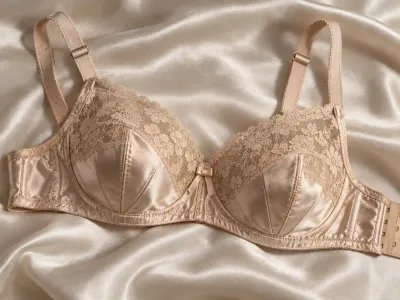
The 1920s bust was flattened - the fashionable boyish silhouette called for bandeau-style bras that minimised curves rather than shaping them. When the natural waist returned in the 1930s, so did an interest in a defined bust, and the bra changed to match. The 1930s bra was designed to lift and separate, shaping the bust into two distinct, rounded forms, supported by shaped cups, seaming, and straps rather than simply compressing the chest.
The biggest innovation was sizing. Before the 1930s, bras were generally sold by band measurement, with little attention to the difference between a small bust and a large one on the same frame. That began to change in 1932, when the American company S.H. Camp started using the letters A to D - though at first the letters described the bust's shape and how low it sat rather than its volume. The Warner company, which is often (and not quite accurately) credited with inventing cup sizes, brought lettered cups to the mass market in the mid-to-late 1930s, so a bra could be chosen for both the chest measurement and the bust. It sounds obvious now, but it was a real change in how underwear was designed and sold, and it made a well-fitting bra available off the shelf for the first time.
Other changes followed the fashions. Bias-cut dresses and backless gowns required low-backed, strapless, or halter-style bras, and elastic yarns like Lastex allowed for better-fitting bands and straps. By the end of the decade, bras with stitched, more pointed cups were beginning to appear - the start of a shaping idea that leads to the 1940s sweater girl and, eventually, the 1950s bullet bra.