The 1950s throughout the 1950s
The Bullet Bra and Conical Construction
A bra built from spiral-stitched concentric circles rather than a smooth, rounded cup - producing the decade's distinctive sharp, pointed bust line rather than a natural silhouette underneath it.
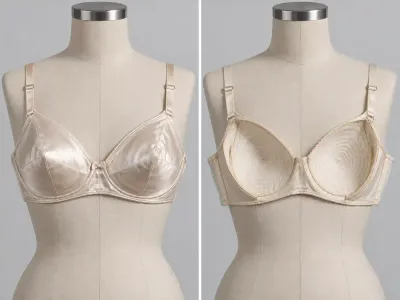
The bullet bra gets its shape from a specific stitching technique rather than any padding or wire: concentric circles of top-stitching spiraling outward from a central point on each cup, pulling the fabric into a firm, pointed cone rather than letting it follow a natural rounded curve. That spiral stitching does real structural work - it's what holds the cone's shape rigid even under the fabric's own weight and the wearer's movement, rather than the shape simply being a product of the bra's cut alone.
This is worth distinguishing clearly from boned bodice construction covered elsewhere in this section, which shapes a garment's outer silhouette using rigid boning inserted into fabric channels. The bullet bra achieves its structure entirely through stitching geometry and fabric tension - no boning, no separate rigid material at all - which is a genuinely different engineering approach to a related problem: both are foundation-garment technologies built to create a stronger, more defined silhouette than the body alone provides, just solving it through completely different construction logic.
I think the deliberate, sharply pointed shape this stitching produces is worth sitting with rather than treating as simply an unusual period quirk - unlike a soft-cup bra designed to approximate the body's natural shape, this cut is actively announcing itself as constructed and architectural, which lines up with a decade generally comfortable with visible structure doing its shaping work rather than hiding it. That's a real throughline connecting this construction detail to the era's crinolines and petticoats elsewhere in this same section: 1950s foundation garments, broadly, weren't shy about being obviously engineered.