The 1930s throughout the 1930s
Sport, Leisure, and the Suntan
Tennis, hiking, cycling, swimming, and sunbathing reshaped the ideal body and wardrobe of the 1930s - an athletic, tanned look that brought shorts, swimsuits, and beach pyjamas into fashion.
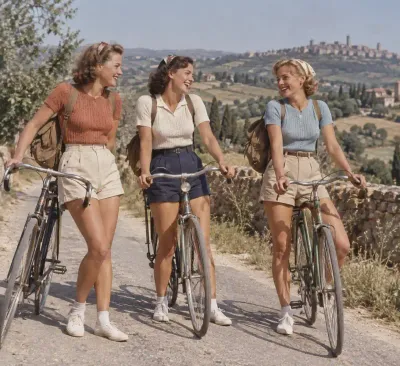
For most of the nineteenth century, pale skin was a mark of status - it showed you didn't have to work outdoors. By the late 1920s that had flipped. Chanel is often credited with making the suntan fashionable after she was photographed tanned on the Riviera, and whether or not that's the whole story, by the 1930s a tan had become a sign of health, leisure, and the money to holiday somewhere sunny. The ideal body changed with it: slim, athletic, and active rather than soft and pale.
The decade was full of new leisure activities. Tennis, golf, swimming, hiking, cycling, and skiing all grew in popularity, and women took part in large numbers. In Europe, youth hostelling and organised hiking were hugely popular, and in France, the Popular Front government introduced paid holidays for workers in 1936, sending many people to the seaside for the first time. All of this needed clothes. Shorts, culottes, and divided skirts appeared for sport and hiking; tennis dresses got shorter; knitwear became a fashion staple; and beach pyjamas and sleek maillot swimsuits filled the beaches.
I think this is one of the most important and underrated fashion stories of the 1930s, because so much of modern casual dress starts here. Sportswear influenced everyday clothing, trousers and shorts became more acceptable for women, and elastic fabrics like Lastex were developed partly to meet the needs of active bodies. Even evening wear was affected - the backless gown made the most of a tanned back. It's the other side of the Hollywood coin: not glamour under the studio lights, but health and fun under the sun.