The Victorian Era Victorian era, broadly
The Bathing Dress
A wool flannel or serge dress worn over matching drawers, with stockings, shoes and a cap - the Victorian answer to sea bathing, designed for modesty first, and heavy as a blanket once wet.
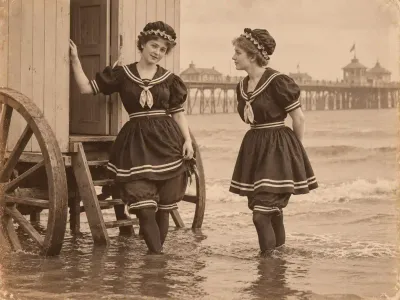
Sea bathing became hugely popular in the Victorian era. Doctors recommended it for health, railways made the seaside reachable for the middle and eventually the working classes, and resorts like Brighton, Scarborough, and Margate boomed. But what did a respectable Victorian woman wear to go into the sea? The answer was a garment designed almost entirely around modesty.
The typical bathing dress was a dress-and-drawers combination, made of wool flannel or serge, usually in navy, black, or dark red, often trimmed with white braid in a sailor style. The dress part had sleeves - long at first, shorter later - and a skirt reaching the knee or below, and underneath it were drawers or loose trousers reaching to the knee or ankle. A cap or hat, dark stockings, and sometimes canvas or rubber-soled bathing shoes completed the outfit. Wool was chosen because it stayed opaque when wet and was warm in cold water, but it absorbed a lot of water, making the whole outfit extremely heavy. Swimming in it was hard, and most women simply bathed - standing, dipping, and splashing in shallow water.
Modesty shaped more than the clothes. On many beaches, men and women bathed separately, and women often used bathing machines: small wooden huts on wheels, pulled into the water by horses, in which a woman changed and then stepped down straight into the sea, out of sight of the beach. Queen Victoria had her own bathing machine at Osborne House on the Isle of Wight, and her use of it added royal approval to a habit that monarchs since George III had already made fashionable.
As the century went on, attitudes relaxed. Mixed bathing began to be allowed around the turn of the century - Bexhill was the first British resort to permit it, in 1901, bathing machines gradually disappeared, and bathing dresses slowly became shorter and lighter, with shorter sleeves and skirts. Swimming as a sport grew in popularity, and more practical swimsuits followed in the early twentieth century, leading eventually to the one-piece maillot, which reached its classic form in the 1930s. I find the bathing dress a fascinating example of the lengths Victorians went to in order to enjoy something while keeping their respectability intact - and a reminder of how new the idea of women swimming freely really is.