The 1930s throughout the 1930s
The Maillot Swimsuit
A close-fitting one-piece swimsuit with a low back and halter or narrow straps - made possible by new elastic yarns, and designed as much for sunbathing as for swimming.
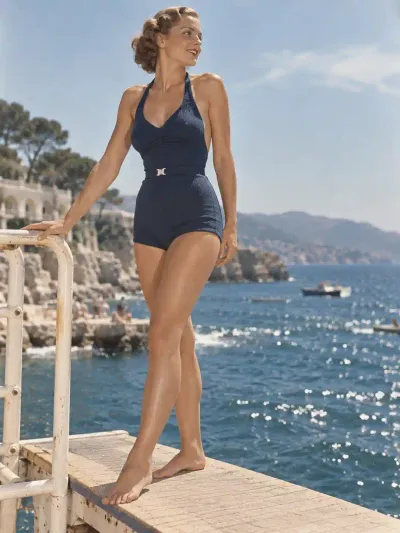
Swimwear changed enormously in the 1930s, and the maillot - a close-fitting one-piece swimsuit - is the garment that captures it best. Earlier swimsuits were often wool knits that sagged, stretched, and got very heavy when wet, or modest multi-part outfits with skirts and bloomers. By the mid-1930s, the fashionable swimsuit was a sleek one-piece that followed the shape of the body, with a low-cut or cutaway back, halter or narrow straps, and short legs, sometimes with a tiny modesty skirt.
Two things made this possible. The first was technology. New elastic yarns - especially Lastex, a rubber core wrapped in fabric fibres - meant a swimsuit could stretch and spring back into shape, and cling to the body without sagging. American swimwear companies like Jantzen, Catalina, and Cole of California embraced the new materials and turned swimsuits into a genuine fashion category, with bright colours, prints, and Hollywood stars in the advertising. The second was the new fashion for sunbathing. Swimsuits with low backs, cut-outs, and removable or halter straps let women tan as much skin as possible, which is why so many 1930s swimsuits have such dramatic backs - they echo the backless evening gown almost exactly.
What I find interesting is how much the swimsuit contributed to the decade's changing ideas about the body. A clinging, stretchy maillot showed a slim, athletic figure in a way that nothing else had, and it helped push the ideal toward a toned, active, suntanned look. It's also a reminder that some of the most important fashion innovations of the 1930s happened in sportswear and underwear rather than on couture runways - the same elastic yarns were transforming girdles at the same time.