The 1930s throughout the 1930s
The Spectator Shoe
The two-tone shoe - white with a contrasting toe and heel in brown, black or navy - borrowed from men's sporting footwear and worn by women with summer day clothes throughout the decade.
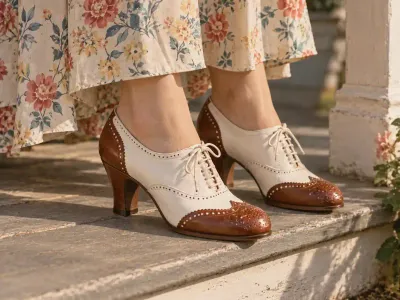
If I had to pick one pair of shoes to sum up 1930s summer daywear, it would be the spectator: a two-tone shoe, usually white or cream with the toe, heel, and sometimes the lacing area picked out in a darker colour. It's crisp, sporty, and cheerful, and it went with almost everything a woman wore in warm weather.
The design came from men's sporting footwear. Two-tone brogues and oxfords had been worn by men for cricket, golf, and other sports since the nineteenth century - the darker leather at the toe and heel hid the dirt and scuffs in the places a shoe wore hardest, while the white body looked fresh and summery. By the 1920s, men were wearing them as smart casual shoes, especially at sporting events and resorts, which is probably where the name comes from: they were shoes for watching sport rather than playing it. In Britain the men's version was often called a "co-respondent" shoe, after the rakish men supposedly named in divorce cases.
Women adopted the style in the late 1920s and it became a staple through the 1930s. The women's versions came as lace-up oxfords, as pumps, and as T-bar or strap shoes, usually on a medium, fairly solid heel that was comfortable for walking. The classic combinations were white with brown or black, and white with navy, but there were plenty of other colour pairings, and the contrast areas were often perforated in a brogue pattern. They were worn with summer dresses, light suits, sporty skirts and blouses, and resort clothes - the whole active, outdoorsy wardrobe of the decade.
What I like about spectators is how they carry that sporting, modern mood into ordinary life. A woman might never play golf, but a pair of two-tone shoes made even a simple rayon day dress look fresh and up to date. Hollywood loved them too, both for men and women, and they show up constantly in films of the era. They stayed popular into the 1940s and 1950s, and they've come back many times since. If you're dressing in a 1930s style today, they're one of the easiest ways to make an outfit look instantly right for the period.