The 1930s mid-to-late 1930s
The Zipper Arrives
The zip fastener moved from boots and bags into fashion in the 1930s - shown off as decoration by Schiaparelli, adopted in menswear, and slowly working its way into women's dresses.
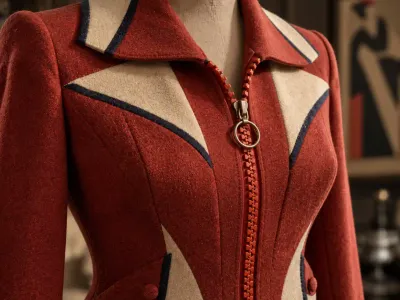
The zip fastener is older than most people think. A working version was developed in the 1910s, and the name "zipper" was popularised in the 1920s when B.F. Goodrich used it for rubber galoshes. But for the first couple of decades of its life, the zipper was mostly used on boots, tobacco pouches, bags, and workwear. It was in the 1930s that it finally started appearing in fashion.
Several things helped. Zips became cheaper, more reliable, and available in lighter weights suitable for clothing. Children's clothing manufacturers promoted them as making it easier for children to dress themselves. In menswear, the zip began replacing buttons in trouser flies during the decade. And in women's fashion, Elsa Schiaparelli made them a feature of her 1935 collections, dyeing plastic zips to match her fabrics and placing them on the outside of garments as a bold, modern design feature rather than hiding them. Having a Paris couturière use zips so visibly gave them a fashionable reputation they hadn't had before.
For everyday women's dresses, though, the change was gradual. Many 1930s dresses still close with hooks and eyes, press-studs, or buttons, often along a side placket, and zips only became standard in dresses later. As a dressmaker I find that side placket fascinating, because it tells you so much about how a dress was meant to be worn: close-fitting 1930s dresses with no waist opening could be difficult to get into, and a zip made that much easier. That story continues into the 1940s, when metal shortages made zips scarce, and then the 1950s, when they finally became universal.