The 1970s 1970-1971
Hot Pants
Short, tightly tailored shorts that briefly rivaled the maxi for headlines - a fast, intense fad that burned out almost as quickly as it caught on.
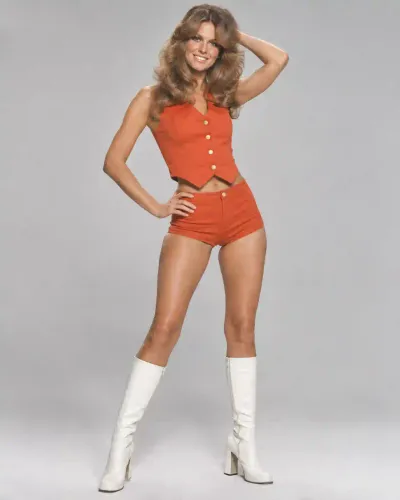
Hot pants are the clearest example in this decade of a genuine fashion press invention that actually took, at least for a season or two. Women's Wear Daily is usually credited with coining the name around 1970-71, and it's a rare case where you can watch a trend get named, marketed, and mass-produced almost in real time rather than emerging gradually out of the street.
The garment itself is more specific than "short shorts" suggests - properly tailored, close-fitting, hitting well above mid-thigh, and cut with real attention to fabric and finish rather than being a cut-down pair of trousers. They turned up in every fabric the decade had strong feelings about: satin and velvet versions for evening, worn with tights and heeled boots to dress the look up considerably past its origins as daywear; denim versions that leaned entirely the other direction, into the era's broader embrace of denim as an everyday fabric rather than strictly workwear. Department stores built entire window displays and ad campaigns around the term within a matter of months, which is a big part of why the fad reads, in hindsight, as manufactured rather than organic - it was, deliberately, and it still worked.
The reason hot pants flamed out as fast as they arrived has everything to do with what else was happening on the runway and the sidewalk at the same time: 1970 was also the year the fashion industry tried, and largely failed, to push the midi skirt on a public that wasn't interested, and hot pants landed right in the middle of that same hemline argument from the opposite extreme. Both the maxi and the mini-adjacent hot pant were competing for the same cultural attention, and hot pants simply couldn't sustain it - too extreme for daily office wear, too closely tied to a single fashion-press push rather than a broader lifestyle shift the way the maxi or bell-bottoms managed. I think that's what makes the garment worth remembering specifically as a fad rather than a trend: it tells you something real about how fast the era's fashion press could manufacture demand, and how quickly that demand could evaporate once the novelty wore off.