The 1940s throughout the 1940s
The Draped Evening Silhouette
Long, fluid, body-skimming evening gowns shaped by draping and pleating rather than boning - the decade's glamour line, kept alive by Paris couturiers and Hollywood costume departments alike.
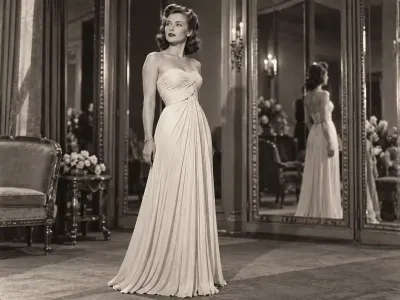
It's easy to write the 1940s off as all square shoulders and short skirts, but the decade had a genuinely beautiful evening silhouette running alongside all that practicality - long, fluid, close to the body, and built from draped and pleated fabric rather than any internal structure. If the utility silhouette is what the decade wore to work, this is what it wore when it was allowed to dream a little.
Its purest expression is Madame Grès, whose silk jersey gowns were pleated by hand into columns that look almost carved, like classical statuary that happens to move. But the same basic idea - let the fabric fall and cling rather than forcing it into a shape - runs right through Hollywood's evening wear of the period too, from slinky draped crepes to Rita Hayworth's strapless black satin in Gilda (1946), which is really the moment this silhouette starts tipping toward the next decade's more structured glamour. Draped necklines, sweetheart bodices, gathered shoulders, and ruching at the waist all belong to this line.
What I find interesting is how the silhouette survived the war at all. Long gowns use a lot of fabric, and evening dress was one of the first things most women simply stopped buying. But draping can also be surprisingly economical if you're clever about grain and cut, and softer rayon crepes and jerseys could stand in for silk. Paris couture kept making evening gowns throughout the occupation, too - for a clientele that's uncomfortable to think about, as the occupation entry covers. So the draped evening line never actually disappeared; it just went quiet for a few years, waiting for the war to end.