The 1940s postwar (1945-1949)
The Postwar Softening Silhouette
The late-decade move from squared utility shoulders to sloping shoulders, longer skirts, and a cinched waist - the slow build-up to, and messy aftermath of, Dior's 1947 New Look.
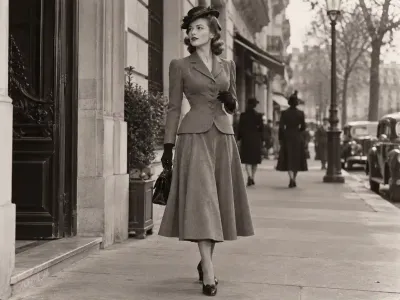
The New Look usually gets told as a thunderclap - February 1947, Dior shows the Corolle line, and overnight everything changes. It's a great story, and it's covered in full in the 1950s New Look entry, but I think the 1940s side of it is more interesting than the thunderclap version allows. Fashion had been leaning toward that shape for a couple of years already. Dior's genius was committing to it completely.
As soon as the war ended in 1945, you can see the square shoulder begin to soften and slope, hemlines creep down past the knee, and waists get more defined. Pierre Balmain's debut collection that same year already showed longer, fuller skirts, and he and Dior had both spent the war designing side by side at Lucien Lelong's house. Designers had been living inside fabric restrictions for years, and the first thing everyone reached for once they could was simply more: more length, more fullness, more curve. The Corolle line gave that instinct its most extreme and most perfectly timed form.
What makes this late-decade silhouette messy - and honestly more interesting - is that most women couldn't follow it right away. In Britain, clothes rationing didn't end until March 1949, and a skirt that needed many yards of fabric was simply out of reach on a coupon budget. That's exactly why the New Look caused such outrage there, with politicians condemning it as wasteful. So for a few years you get a real split: the fashion ideal racing ahead toward padded hips and full skirts, and everyday wardrobes letting down hems, adding contrasting bands to lengthen old skirts, and unpicking shoulder pads from existing jackets. The decade ends with the look of the 1950s already decided, but only half-worn.