The 1940s occupation (1940-1944)
Paris Under Occupation
Four years of German occupation cut Paris off from the rest of the fashion world - couture survived, for a fraught clientele, while ordinary Parisiennes answered shortages with towering hats, wooden soles, and a streak of defiance.
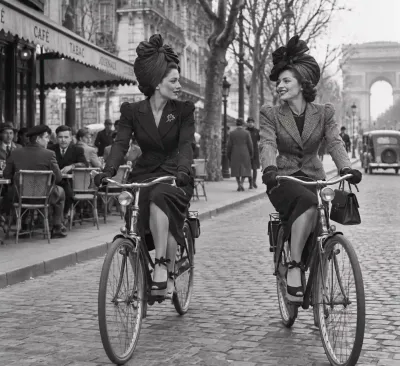
When German troops entered Paris in June 1940, the fashion capital of the world was cut off almost overnight. Foreign buyers and press stopped coming, French Vogue suspended publication, and many of the most famous names left or closed - Chanel shut her couture house in 1939 and spent the occupation living at the Ritz, in circumstances that have never stopped being controversial. For the next four years, Paris fashion went on inside a bubble, and what happened inside it is one of the most complicated stories in this whole project.
At the top, couture carried on. Lucien Lelong blocked the occupiers' plan to move the industry to Berlin and kept dozens of houses running, which saved thousands of skilled jobs and a whole craft ecosystem. But the clients who could afford couture during the occupation were largely the wives of German officers, collaborators, and those who had grown rich on the black market. Some designers, like Madame Grès, pushed back openly; others simply kept working. I don't think it's possible to tell this part of the story as either pure heroism or pure collaboration. It's both, and it's uncomfortable, and I'd rather be honest about that than tidy it up.
On the street, the picture was different. Fabric and leather were rationed, so Parisiennes wore wooden-soled shoes that clattered on the pavements and rode bicycles everywhere, with skirts cut to suit. Hats weren't rationed in the same way, so milliners built extraordinary, towering creations from scraps, paper, wood shavings, and anything else available - enormous turbans included. They were read by many as a kind of quiet defiance: looking extravagant and unbowed when the occupiers wanted austerity. After the Liberation in August 1944, the couture houses mounted the Théâtre de la Mode in 1945 - a touring exhibition of fashion dolls in miniature couture - to raise money and announce that Paris was back. Two years later, the New Look proved it.