The 1940s wartime (1940-1945)
The Turban and Headscarf
A length of fabric wrapped and knotted around the head - factory safety gear, a disguise for unwashed hair, and in occupied Paris, an act of quiet defiance.
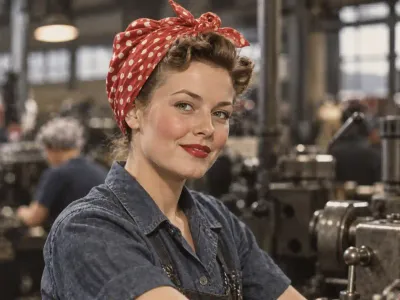
A wrapped turban or knotted headscarf is probably the single easiest way to make an outfit read "1940s" today, and it earned that place honestly. Few accessories in any decade did as many different jobs at once.
The first was safety. Women on factory floors were working near belts, lathes, and drive shafts that could catch loose hair, and a tightly tied scarf or turban kept long hair out of the machinery. There's a famous example of how seriously this was taken: in 1943 the US government asked Veronica Lake, whose long, peek-a-boo hairstyle was widely copied, to pin her hair up publicly so that women war workers would follow suit. The second job was practical in a more everyday way. With shampoo, hot water, and time all in short supply, a turban covered hair that hadn't been set or washed, and it could be tied in seconds over pin curls on the way to work. And headscarves were an obvious use for a small piece of printed silk or rayon - a propaganda print scarf worn on the head was a way to wear fashion and patriotism at the same time on almost no coupons.
The turban also had a completely different life in occupied Paris. Hats weren't rationed there the way cloth was, so milliners built increasingly towering, extravagant turbans and hats out of scraps, paper, wood shavings, and whatever else came to hand. That's covered more in the occupation entry, but I think it's lovely that the same basic shape - fabric wrapped around the head - could mean practical, hard-working modesty in a Detroit factory and exuberant, slightly defiant excess on a Paris boulevard in exactly the same years.