The 1940s throughout the 1940s (introduced late 1930s)
The Wedge Shoe
A shoe with a solid sole running from heel to toe, often in cork or wood - born of material shortages, and one of the decade's most widely worn shoe shapes.
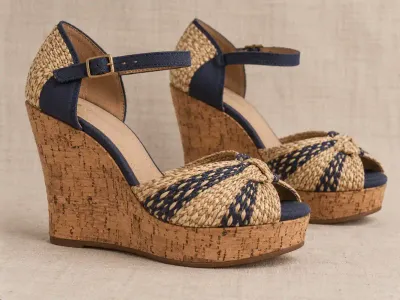
The wedge is one of my favourite examples in all of fashion history of a shortage turning into a style. It's usually credited to Salvatore Ferragamo, who developed cork wedges in Italy in the late 1930s when sanctions and the diversion of materials to the military made the steel shanks he used in conventional heels hard to get. A solid wedge of cork doesn't need a steel shank - the sole supports the foot all the way along - so the problem simply disappears.
By the 1940s, the wedge was everywhere, for much the same reasons across different countries. Leather was needed for military boots, so civilian shoes were restricted: in Britain shoes came out of the coupon allowance, and in the US, shoes were one of the few clothing items that were actually rationed, from 1943. Wedges could be built on cork, wood, or layered alternative materials, with uppers in fabric, raffia, or scraps of leather, which made them far easier to produce under those limits. In occupied France, wooden-soled shoes became so common that people talked about the clacking sound of wooden soles on the pavements.
What I love about the wedge is that it never felt like a sacrifice to wear. A high cork wedge gives you height without the wobble of a narrow heel, it's more comfortable for a long day on your feet, and it balances the strong shoulders and short skirts of the utility silhouette nicely, adding visual weight at the bottom of the figure to match the top. Designers like Claire McCardell went the other way and made flats fashionable, but the wedge is the shoe that most people actually wore - and it's come back around in almost every decade since.