The 1950s mid-to-late 1950s
The Stiletto Heel
A high, needle-thin heel made possible by a steel rod inside - developed in Paris in the early-to-mid 1950s, credited above all to Roger Vivier at Dior, and blamed for wrecking floors everywhere.
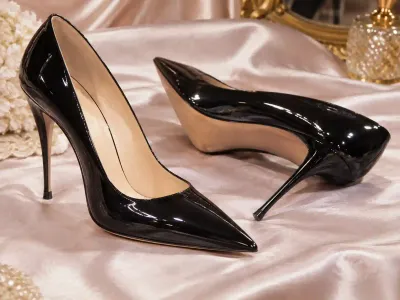
High heels weren't new in the 1950s, but the stiletto was. Before this decade, a heel had to be fairly thick to carry a person's weight - even elegant heels were built from wood and needed some bulk to stay strong. The stiletto changed that by putting a thin steel rod inside the heel, which meant it could be very high and very narrow at the same time.
Several designers were working toward a slimmer, higher heel in the early 1950s, and Italian shoemakers were part of that story, but the name most closely associated with the stiletto is Roger Vivier. From 1953 he designed shoes for Christian Dior, and his needle-thin heels - the French called them talons aiguilles, "needle heels" - became part of the Dior look. The word "stiletto," after the thin Italian dagger, caught on in the English-language press in the mid-1950s. By the end of the decade, the stiletto was usually paired with a sharply pointed toe, which made the whole shoe look even longer and sleeker.
The effect on the body is a big part of why it fit the decade. A high, thin heel tips the pelvis forward, arches the back, and shortens the stride, which exaggerates the curve of the hips and bust and produces a slow, swaying walk. That's exactly what the fitted wiggle dress was designed to show off, and it's no accident the two became fashionable together. Stilettos also made narrow capri pants and cocktail dresses look longer and more elegant.
The downside was very practical. All of a woman's weight pressing down through a tiny heel tip produced a huge amount of pressure, enough to dent wooden floors, pierce linoleum, and damage aircraft floors. Some public buildings, historic houses, and airlines banned stilettos or asked visitors to cover the tips. Doctors worried too, and not without reason. I have a soft spot for how much trouble this little shoe caused. It's one of the few 1950s fashions that feels genuinely aggressive, a sharp, slightly dangerous counterpoint to all the petticoats and pastels, and it never really went away - nearly every high heel since owes something to it.