The 1970s late 1970s
The Disco Silhouette
Body-conscious, bias-cut, and built to move - clinging jersey, bare shoulders, and metallic shine designed specifically for a night on a lit dance floor.
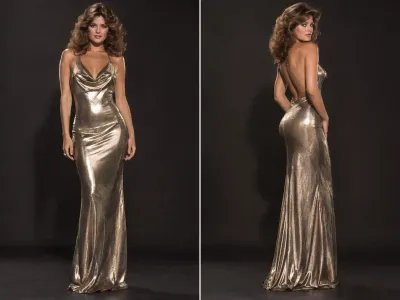
This is the silhouette that finally answers a question the rest of the decade had been circling for years: what does clothing look like when it's designed for a body that's actually moving, not standing still under studio lights? The disco silhouette is close, clingy, and cut to let a body dance in it without restriction, which is a genuinely different design brief than most eveningwear before it.
The construction detail that makes this work is the bias cut - fabric cut on the diagonal grain so it drapes and clings to the body's actual shape without darts or boning forcing it there, a 1930s technique that designers like Halston revived specifically for slinky jersey gowns. Pair that with a halter neckline baring the shoulders and upper back, add lurex or metallic thread woven right into the knit so the whole garment catches light under a mirror ball, and finish with platforms tall enough to be seen across a crowded floor, and you have the full picture. Nowhere is this silhouette more legible than Studio 54, the New York club that opened in April 1977 and became a genuine testing ground for what this kind of dressing actually looked like on real, famous bodies - Bianca Jagger and Liza Minnelli among them.
I think what's easy to miss, looking back at this silhouette purely as costume-y nightlife glamour, is how functional it actually was. Rigid, boned eveningwear simply doesn't survive several hours of dancing - it restricts range of motion, traps heat, and isn't built to move with a body doing anything more athletic than standing for a receiving line. A bias-cut jersey gown does all of that without complaint, which is exactly why this silhouette trickled down so fast from nightclub to department-store disco section by decade's end. It's eveningwear designed around what the body inside it was actually going to do that night, not just how it would look arriving.