The 1970s late 1970s
The Halter Top
A tie-neck, bare-shouldered top built for movement on the dance floor - and a real construction break from decades of built-in bra structure.
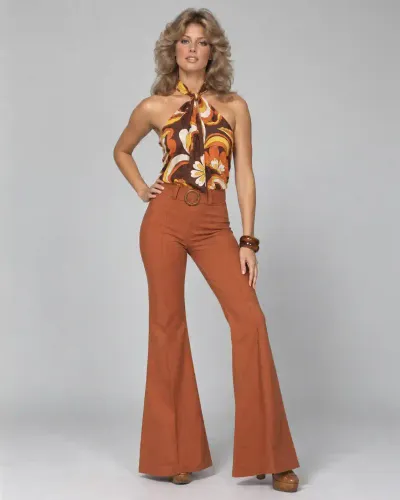
A halter top isn't a 1970s invention - the construction, fabric tied or fastened behind the neck and leaving the back and shoulders bare, goes back decades before disco got hold of it. What the late '70s add is a specific context that made the halter feel new again: a dance floor, a body-conscious dress code, and a fashion moment that wanted bare skin and unrestricted arm movement at the same time, which the halter's construction happens to deliver better than almost any other bodice shape.
That construction has real implications worth being specific about. A proper halter is engineered to stay up entirely from the neck tie and a fitted underbust or waist seam, with no shoulder strap doing structural work at all - which meant it genuinely couldn't be worn over a standard shoulder-strap bra without the straps showing, and a lot of late-70s halter dressing leaned into that directly, worn with minimal support or none, in step with the broader loosening of foundation garments discussed in that construction entry. Fabric choice mattered enormously here too: a stiff or heavy material simply doesn't drape convincingly off a neck tie, which is why the halter shows up constantly in slinky jersey and, by the back half of the decade, in lurex and other metallic knits built specifically for catching light under a dance floor's lighting rig.
Put those pieces together and the halter top reads less like a random revival and more like the logical bodice for everything else the disco silhouette was already doing - bare, body-skimming, cut for movement rather than structure, and built out of fabric that photographed well under exactly the kind of lighting a place like Studio 54 was designed around. I don't think it's a coincidence that a genuinely old garment shape found its defining decade at the precise moment fashion stopped assuming a woman's evening top needed a shoulder strap and internal boning to hold its own shape.