The 1950s 1950s
Halter Sundress
A casual, bare-shouldered warm-weather dress with a strap that ties or fastens behind the neck - a relaxed counterpoint to the decade's more structured silhouettes.
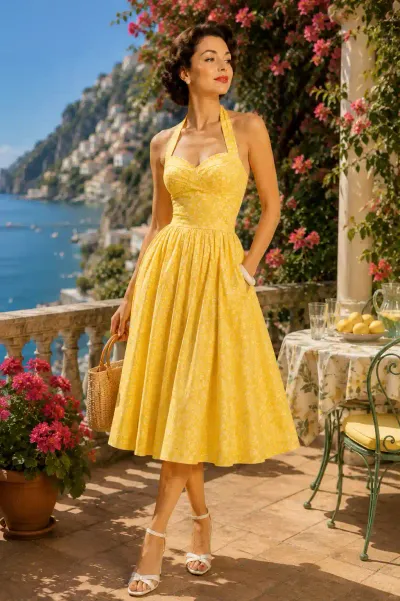
Next to all the boning and petticoats elsewhere in the decade's wardrobe, the halter sundress is refreshingly simple - it's one of the few places 1950s fashion lets the body just be comfortable in the heat.
Keeping a halter neckline secure without shoulder straps doing the usual work is a real construction problem, and 1950s patternmaking solved it with a few consistent tricks. A boned or heavily interfaced bodice is doing most of the actual weight-bearing, similar in spirit to the boning discussed in the boned bodices entry, just applied to a much lighter, more casual garment than an evening gown - enough structure that the dress holds its shape and stays put without needing to be cinched painfully tight around the ribcage to compensate. The halter strap itself is usually cut on the straight or bias depending on how much stretch or rigidity was wanted at the neck, and it's frequently anchored to the bodice at a wide base rather than a single narrow point, distributing pull across more fabric so the whole thing doesn't twist or dig in against the back of the neck through a long, hot day of actually wearing it.
What I like about the halter sundress as a design problem is that it's solving for comfort in a completely different way than the corseted eveningwear elsewhere in the decade's wardrobe - instead of accepting some discomfort in exchange for a dramatic silhouette, it's specifically engineered to deliver bare-shouldered, warm-weather ease without sacrificing the fitted, structured look the decade still generally favored. Paired with a lightweight cotton like gingham, it's about as close as mainstream 1950s fashion gets to admitting that comfort and good design aren't actually in conflict - a lesson the era's more elaborate eveningwear was still very much resisting.