The 1950s 1950s
Gingham
A checked cotton weave that became shorthand for wholesome, girlish daywear across the decade.
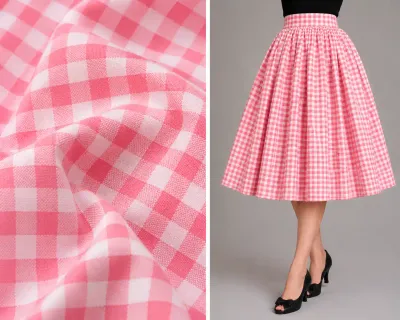
Gingham's everywhere in 1950s daywear - sundresses, blouses, the occasional circle skirt - and it carries a very specific tone: cheerful, a little folksy, distinctly unfussy compared to satins and taffetas.
The weave itself is genuinely simple, which is part of why it's stayed cheap and accessible across centuries of use - gingham is a plain weave using dyed and undyed (or two differently dyed) yarns arranged in an even, alternating pattern in both the warp and weft, producing that instantly recognizable checked or plaid effect entirely through the weave structure rather than through printing. That means the pattern is genuinely woven into the cloth, visible identically on both faces of the fabric, rather than sitting on the surface the way a printed pattern does - a small technical detail that gives gingham a certain honest, unfussy character even before you factor in its cultural associations, since there's nowhere for the pattern to hide or wear away unevenly.
Its crossover from workwear into fashion proper had already been underway for decades before the 1950s - gingham had long been a practical, inexpensive fabric for aprons, work shirts, and children's clothing precisely because it was cheap, sturdy, and didn't show soil or wear the way a plain solid might. What the 1950s specifically did was take that established practical, humble reputation and lean into it as an aesthetic choice rather than treating it as something to move past once a household could afford better - gingham sundresses and blouses read as deliberately wholesome and unpretentious specifically because everyone already associated the fabric with practical, everyday use. That's really the whole trick behind gingham's "cheerful, folksy" 1950s image: it wasn't inventing a new meaning for the fabric so much as fashion finally deciding its old, humble meaning was worth wearing on purpose.