The 1950s 1950s
Felt
A dense, non-woven wool fabric that doesn't fray at a cut edge - exactly why it became the material of choice for appliquéd circle and poodle skirts.
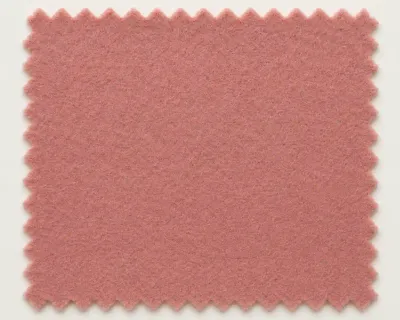
Felt's whole appeal here is practical rather than luxurious - you can cut a poodle or a boomerang shape straight out of it and appliqué it on without hemming a single edge, which is exactly why home sewists loved it as much as manufacturers did.
Home economics classes did a huge amount of work spreading this specific craft, and it's worth understanding how deliberately structured that teaching actually was. By the 1950s, home economics was a near-standard part of the American public school curriculum for girls, typically including a genuine garment-construction unit, and a felt appliqué circle skirt was close to an ideal beginner project for exactly that setting: the base circle skirt pattern is simple geometry rather than complex fitting, felt doesn't fray so there's no seam-finishing skill required for the appliqué shapes themselves, and the finished result was something a teenager could immediately wear to school and have recognized as genuinely fashionable, not just a classroom exercise. That immediate social payoff mattered enormously for keeping students engaged with what was, underneath the fun motifs, a real introduction to garment construction fundamentals.
Beyond the classroom, patterns and motif templates for popular designs circulated through women's and teen magazines, sewing pattern companies, and simple word-of-mouth copying between friends and classmates - a teenager who liked a friend's hot-rod or musical-note skirt could often just trace the shape rather than needing a purchased pattern at all. That informal, copy-and-adapt culture is part of why so many surviving poodle skirts and their novelty-motif cousins show real handmade variation even within a shared basic design - no two home-sewn versions of the same motif look quite identical, which I think is part of their charm now and was very much part of the appeal at the time too, when a slightly personalized version of a popular design let a teenager participate in a shared trend while still making it visibly her own.