The 1950s 1950s
Circle Skirt
A skirt cut from a full circle of fabric so it falls in even, sweeping fullness - the poodle skirt's plainer, more versatile cousin.
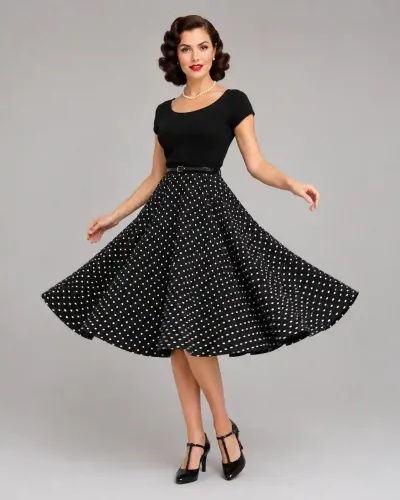
Structurally this is a very simple pattern - a full circle with a waist and hem cut out of it - but the effect is enormous fullness without the bulk of gathers. It's a direct descendant of Dior's New Look silhouette scaled down into something you could actually make at home.
The pattern math is genuinely elegant once you see it laid out: cut a full circle of fabric, remove a smaller circle from the center sized to the wearer's waist, and the remaining ring of fabric falls in continuous, even fullness all the way around the hem with no gathering, pleating, or darting required at all - which is part of why this became such a popular home-sewing project through the decade, since it's forgiving of a beginner's skill level while still producing a genuinely dramatic, fashionable result. A "half circle" version, using less fabric and producing a less extreme flare, was a common variant for a slightly less dramatic silhouette or for making the most of limited yardage, but the full circle is the version that best captures the era's characteristic swing and sweep.
For that fullness to actually swing the way period photographs show, though, the skirt needs real support underneath - the crinolines and petticoats entry covers this in more depth, but the short version is that a circle skirt worn over just an ordinary slip hangs comparatively flat and unremarkable, while the same skirt over a stiffened net or starched petticoat holds its shape out and moves with real drama when the wearer turns or dances. That relationship between skirt and understructure is really the same engineering logic running through the whole decade's fuller silhouettes, just scaled down from Dior's twenty-yard New Look skirts into something achievable on a home sewing machine - which is exactly why I keep calling this garment the New Look's most successfully democratized descendant.