The 1970s mid-to-late 1970s
The Wrap Silhouette
A soft, body-skimming shape built around a tied closure instead of a zipper - easy to wear, flattering across body types, and the decade's biggest commercial fashion story.
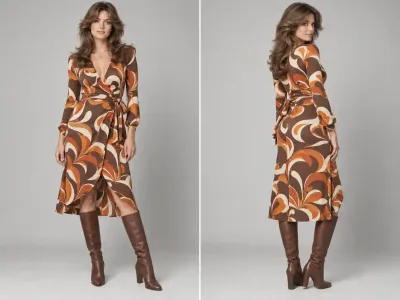
If I had to pick one silhouette that best explains how the 1970s actually differed from the decades before it, this might be the one. It's not flashy in the way disco is, and it's not politically loaded in the way punk is - it's just an unusually well-solved piece of clothing design, and it became a genuine commercial phenomenon because of it.
The mechanics are simple, which is exactly the point: a bodice that crosses at the front and ties at the waist rather than closing with a zipper or a row of buttons, cut to skim rather than cling, in a fabric with enough give to adjust to the body wearing it rather than the other way around. Jersey is really the fabric that makes this work - it has to drape and stretch slightly for the tie closure to sit right - and Diane von Furstenberg is the designer whose name is now inseparable from the silhouette, thanks to the printed jersey wrap dress she launched in 1974. Her full entry covers the business side of that story, but the silhouette itself spread well beyond her label into wrap-front blouses, robes, and skirts through the rest of the decade.
What I think actually explains the commercial scale of this one is how directly it answered a real, unglamorous problem: a growing number of women needed clothes that worked for a full day at an office and could transition to evening without a wardrobe change, that didn't require help getting in or out of, and that looked put-together on bodies of genuinely different shapes and sizes without alteration. No zipper meant no fitting appointment. A tie closure adjusts itself. That's a fundamentally different design premise than the fitted, boned, single-body-type construction that had dominated womenswear for decades, and it's why this silhouette reads less like a passing trend and more like a real, lasting shift in what "easy to wear" was allowed to mean.