The 1970s early-to-mid 1970s
Ethnic and Global Influences
Caftans, ikat, and 'peasant' prints drew real fascination with non-Western dress into the mainstream wardrobe - alongside a genuine, worth-naming pattern of flattening specific cultural garments into a vague marketing category.
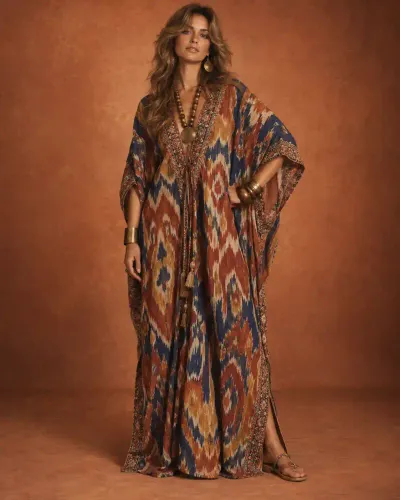
I've gone back and forth on how to write this entry, and I want to be upfront about that rather than pretend it's simple. The early-70s boho wardrobe pulled real, specific garments and techniques from all over the world into mainstream Western fashion in a way that was genuinely more visible and more commercially significant than in previous decades: the caftan from North African and Middle Eastern dress, ikat and batik dyeing techniques from Southeast Asia and West Africa, ponchos drawn from Andean garments, embroidery and blouse silhouettes lifted from Eastern European and Mexican folk dress, all of it running alongside the boho and prairie looks covered in the bohemian/prairie silhouette entry.
Some of that really was curious, engaged cross-pollination - designers and consumers genuinely interested in construction techniques, dye methods, and silhouettes they hadn't grown up with, at a moment (also covered in the back-to-nature entry) when "authentic" and "handmade" were being actively prized against mass-produced synthetic fashion. But I don't think it's honest to stop there. A huge amount of what got sold through this period was marketed under a vague, undifferentiated "ethnic" label that made no real effort to name which culture a print or garment shape actually came from - a caftan pattern derived from Moroccan dress and a completely unrelated batik print from Indonesia could both get filed under the same catalog copy, stripped of the specific cultural and religious meaning either one carried in its original context, and sold as interchangeable seasonal texture. Real garments with real histories were getting flattened into a single generic "exotic" mood, which is a genuinely different thing from appreciation, even when the individual shopper buying a caftan had no bad intent at all.
I don't think the answer is to pretend this era's global borrowing was either purely villainous or purely innocent - it was both things running at once, the same as most fashion history involving cross-cultural contact, and I'd rather be straightforward about that tension than write around it. What I do think is worth carrying forward is the specific mechanism: commercial fashion's habit of collapsing distinct cultures into one marketing category is a pattern that shows up again and again well past this decade, and the 70s "ethnic" boom is a genuinely clear, well-documented early case of it happening at real mainstream scale.