The 1970s early-to-mid 1970s
The Back-to-Nature Movement
Growing environmental awareness - the first Earth Day among its clearest markers - pushed fashion toward natural fibers, earthy palettes, and homemade clothing as an actual values statement.
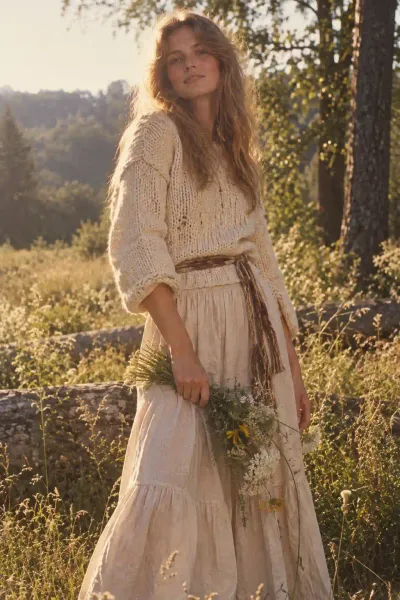
I think this is the entry that best explains why so much early-70s dressing reads as deliberately unpolished rather than simply unfinished. The first Earth Day happened on April 22, 1970, drawing an estimated 20 million participants across the US - a genuinely massive, coordinated environmental demonstration that's often credited with accelerating the creation of the EPA later that same year. That's not a fashion event on its face, but it landed right alongside a broader countercultural shift toward organic food, health-consciousness, and a general suspicion of synthetic, mass-produced modernity that had been building since the late 60s - and clothing was one of the most visible, everyday places that suspicion could actually be expressed.
You can trace the wardrobe consequences fairly directly. Natural fibers - cotton, wool, suede, undyed or vegetable-dyed textiles - got chosen deliberately over the era's abundant, cheap synthetics as a kind of quiet statement, and earth-toned palettes (rust, olive, cream, brown) read as "natural" in a way bright polyester prints deliberately didn't. Suede and fringe, with its Native American-influenced silhouette and genuinely tactile, unprocessed feel, fit this mood particularly well, and so did the loose, undyed cheesecloth and gauze running through so much of the boho wardrobe. Laura Ashley built an entire commercial identity out of a related but gentler version of the same instinct - cottage-industry romanticism, natural cotton prints, a look that read as pre-industrial by design rather than accident.
What I think ties the whole entry together is that homemade and handcrafted clothing wasn't just a budget workaround during this period, even though it often was cheaper - it was doing real cultural work as a values statement, a visible way of opting out of mass-produced synthetic modernity that a store-bought garment, however similar it looked, simply couldn't communicate in the same way. That's a genuinely different motivation than the boho aesthetic gets credited with when it's remembered only as a look; for a real slice of the people wearing it, the clothing was standing in for an actual environmental and anti-industrial position, not just following a trend.