The 1970s early 1970s
Suede and Fringe
Fringed suede jackets and vests turned a frontier-and-rock-stage material into the era's shorthand for 'natural,' unpretentious dressing.
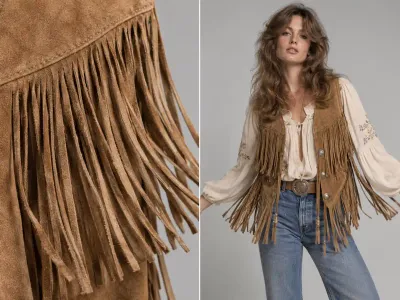
There's a specific silhouette I associate with the earliest years of this decade more than any other single image - a fringed suede vest, worn over a peasant blouse, moving with the wearer instead of hanging still - and suede is doing real construction work there, not just decorative work. It's a soft, napped leather with genuine drape and give, which is exactly why it could be cut into loose, unstructured vests and jackets that moved rather than the stiffer smooth-leather garments of earlier decades.
The fringe itself has a specific, not-always-comfortable lineage: it drew directly on Native American dress, by way of Western films, rodeo culture, and rock musicians (Buffalo Springfield and later a whole run of West Coast rock acts performed in fringed suede as a matter of course) who'd already been borrowing that silhouette for years before it reached mainstream retail. By the time department stores were selling fringed suede vests to suburban customers, the reference had been flattened into a generalized "frontier" or "Western" look rather than anything connected to actual specific tribal garments or makers - a pattern of borrowing-and-blurring that shows up across a lot of this era's cross-cultural dressing, and one I get into more directly in the ethnic and global influences entry.
What suede and fringe were really selling, underneath the specific silhouette, was an idea of authenticity - a "natural," handcrafted-feeling material standing in visual opposition to the synthetic knits taking over everywhere else in the wardrobe, and fitting neatly into the broader back-to-nature movement running through the early '70s alongside cheesecloth, undyed cottons, and homemade clothing generally. It layered easily over the bohemian-prairie silhouette that dominated those same years, and I think that's really the throughline: suede and fringe were never primarily about the leather itself, they were about signaling a values position - unpretentious, outdoorsy, a little rebellious - through a material that felt handmade even when, by mid-decade, most of it very much wasn't.