The 1980s throughout the 1980s
Spandex and Lycra
An elastane fiber that stretches and recovers its shape without any structural boning or built-in tension - the material that made body-conscious clothing something a body could actually move in.
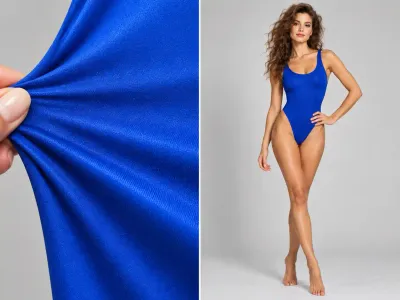
Spandex - DuPont's trademarked version is Lycra, though the generic elastane fiber was first developed in the late 1950s and reached commercial fabric production in the early 1960s - is a fiber capable of stretching several times its resting length and snapping back to its original shape afterward. What changes this decade isn't the fiber's invention but its wholesale adoption into mainstream fashion fabric blends rather than staying confined to swimwear and foundation-garment elastic, where it had mostly lived for two decades already.
Blended into cotton or nylon knits at varying percentages, spandex gave designers something genuinely new to work with: a fabric that could hold a close, body-skimming shape through real, sustained movement rather than only while a wearer stood still. That's a categorically different proposition than boning or structured foundation garments, which achieve close fit by restricting the body rather than moving with it - a stretch-knit bodysuit or legging fits just as closely during a deep lunge as it does standing at rest, which simply isn't true of a boned or rigidly structured equivalent.
That property is exactly what makes the aerobics silhouette possible in the first place - leotards, bodysuits, and stirrup pants all depend on spandex content to stay fitted through genuine physical exertion rather than working loose or restricting the movement they're meant to support. I think this fabric is a genuinely underappreciated turning point in fashion textile history: it's the material precondition for an entire decade's worth of body-conscious activewear-as-streetwear, and very little of that broader story works at all without it.