The 1980s mid-to-late 1980s
Stirrup Pants
Fitted stretch-fabric trousers finished with a fabric loop that hooks under the foot, keeping the hem pulled taut down the length of the leg rather than riding up or bunching.
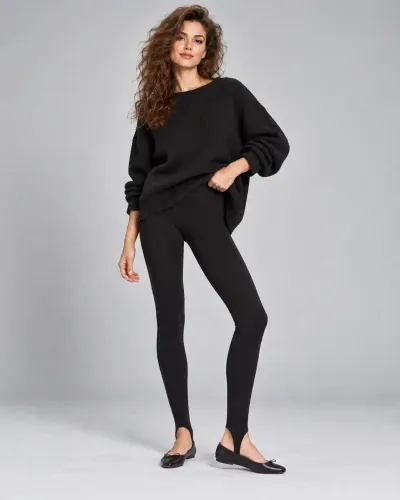
Stirrup pants solve a small, specific problem that plain fitted leggings or trousers create on their own: without something anchoring the hem in place, a close-cut stretch pant leg tends to ride up with movement, bunching at the ankle and losing the clean line it's supposed to have. The stirrup - a narrow loop of the same fabric, sewn into the hem and hooked under the arch of the foot - fixes that directly, holding the leg taut from waistband to instep no matter how much the wearer moves.
That fix only really matters because of what fabric these trousers were actually made from - the same spandex and Lycra stretch blends driving the decade's aerobics silhouette more broadly. A rigid woven trouser doesn't need a stirrup because it isn't clinging closely enough to the leg to ride up in the first place; a genuine stretch-knit pant does, which makes the stirrup a direct byproduct of the same fabric technology reshaping so much of this decade's other garments.
I think what's most interesting about stirrup pants is how completely they crossed over from purely athletic or dance-adjacent wear into mainstream, non-athletic daywear - worn under an oversized sweater or a shoulder-pad blazer rather than only to an exercise class, by women who had no particular activewear intentions at all that day. A small functional detail borrowed from riding breeches and ski pants ends up defining an entire category of decade-specific casual trouser, purely because it happened to solve a real problem stretch fabric was creating everywhere else in the wardrobe too.