The 1980s mid-1980s
The Parachute Pant
A loose, tapered trouser cut from tough, slightly shiny ripstop nylon and cinched at the ankle - built to survive breakdancing floor spins that would tear an ordinary pair of pants apart.
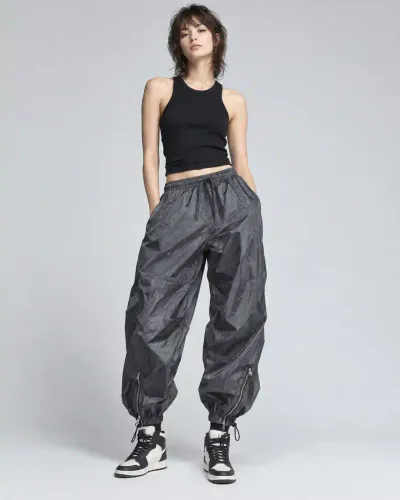
The parachute pant is cut from the same lightweight, tightly woven ripstop nylon originally developed for actual parachutes - tough, slightly stiff, with a faint sheen and a distinctive rustle with movement - shaped into a loose, roomy trouser that narrows and cinches at the ankle, often with a zipper or drawstring closure. That fabric choice wasn't a styling accident: ripstop nylon resists tearing and abrasion far better than denim or cotton twill, which mattered enormously to the breakdancers who wore this garment while spinning, sliding, and dropping onto pavement or cardboard repeatedly during a routine.
That practical origin is really the whole story worth understanding here. The pant grew directly out of the hip-hop and early breakdancing scene, where a garment's ability to survive real physical punishment mattered more than any fashion consideration, and the loose cut through the leg gave dancers the freedom of movement a fitted trouser simply couldn't offer. Only after the style had already proven itself functionally within the dance scene did it spread outward into more general youth fashion, worn increasingly by people with no breakdancing background at all, drawn to its distinctive silhouette and rustling, futuristic-feeling fabric.
I think the parachute pant is a clean example of a garment moving in the opposite direction from most of this decade's other big trouser stories - rather than a designer's runway idea trickling down into everyday wear, this is a street-level, function-first garment that spread upward and outward from a specific dance subculture into much broader youth fashion, carrying real physical logic in its construction long after most of its wearers had stopped thinking about why it was built that way in the first place.