The 1980s throughout the 1980s
MTV and Fashion
A cable channel that launched in August 1981 and turned musicians into a new kind of fashion authority - style spreading at the speed of a three-minute video rather than a seasonal runway show.

MTV went on the air on August 1, 1981, to an audience so small that its own staff had to cross the Hudson to a New Jersey bar that carried the channel. They watched footage of the Apollo 11 moon landing, then the Buggles' "Video Killed the Radio Star." The business model, as Smithsonian describes it, was simple: record labels supplied promotional videos for free, and MTV sold the teenage audience to advertisers of soft drinks, films and beer. By 1989 American cable had grown to 53 million subscribers, and the channel's own campaigns had pop stars telling viewers to demand it from their cable companies.
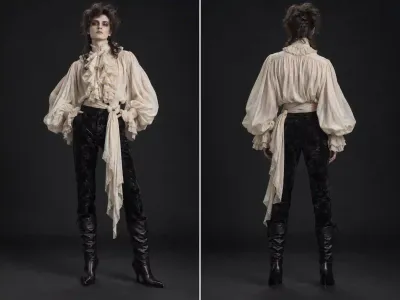
A music video is three or four minutes of pictures meant to be watched closely and watched again, which is a very different thing from a magazine spread or a runway show seen once by a small audience. What it did best was spread looks that already existed. The New Romantic silhouette is the clearest case: it was built in a London nightclub that had closed before MTV launched, and the videos carried it to people who would never have got past that club's door.
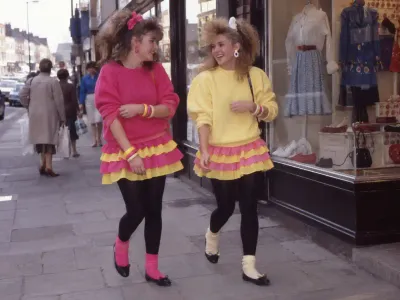
For women's dress the more important change was who the videos were talking to. The media scholar Lisa A. Lewis, in Gender Politics and MTV (1990), studied what she called "female-address" videos of 1980 to 1986 by Pat Benatar, Cyndi Lauper, Tina Turner and Madonna. Her argument was that these women took over the signs of a gender-typed culture - clothing, dancing, the street as a public space, even musical instruments - and in doing so created a new audience for MTV among teenage girls. She followed those fans to concerts and shopping malls, where they copied their idols' looks. Lauper's "Girls Just Want to Have Fun," whose video Billboard credits with helping to define early MTV, became an anthem for girls in particular; her look has its own entry.
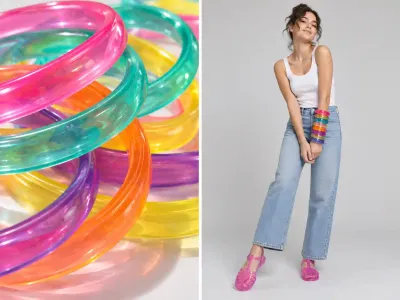
You can see the effect in what girls actually bought. TIME's cover story of May 1985 opened by telling parents they had "seen Madonna wiggling on MTV," and then listed what their daughters were saving babysitting money for: cross-shaped earrings and fluorescent rubber bracelets, white lace tights cut off at the ankle, black tube skirts rolled down at the waist. Twelve-year-olds were wearing tour shirts printed VIRGIN - a slogan T-shirt at $13 to $22 - and concert jewellery sold for $5 to $30. MTV's first Video Music Awards in 1984 had already given the look its biggest stage, when Madonna burst out of a 17-foot layer cake to sing "Like a Virgin."
The channel also decided whose style got that exposure, and for most of the decade it wasn't Black artists'. MTV defended its playlist as a rock format; in 1983 David Bowie asked a VJ on air why so few Black musicians appeared, and CBS Records reportedly had to threaten to pull all its videos before "Billie Jean" went into rotation. A show built around Black artists, Yo! MTV Raps, didn't premiere until August 6, 1988. That's why hip-hop style spent most of the 1980s spreading through its own clubs, record shops and neighbourhoods rather than through MTV, and why it reached the channel fully formed.
Sources
- Michelle Delgado, "At 40, MTV Is Officially Over the Hill" - Smithsonian Magazine, 2021
- Lisa A. Lewis, Gender Politics and MTV: Voicing the Difference (Temple University Press, 1990) - publisher's description
- John Skow, "Madonna Rocks the Land" - TIME, 27 May 1985
- "Check Out Some Rare Photo Outtakes From Cyndi Lauper's 'She's So Unusual' Ahead of Its 40th Anniversary" - Billboard, 2023