The 1980s mid-1980s
Cyndi Lauper and Thrift-Store Eclecticism
A playful, deliberately mismatched thrift-store aesthetic - clashing prints, layered vintage pieces, wildly dyed hair - offered a genuinely different pop-star fashion model than Madonna's more provocative club-kid look.
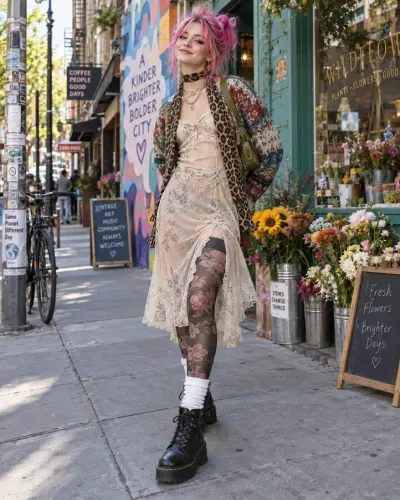
Cyndi Lauper's breakthrough with "Girls Just Want to Have Fun" in 1983 arrived alongside a visual style built almost entirely from secondhand and thrift-store pieces, layered and mismatched with a genuinely playful disregard for whether anything technically coordinated - clashing prints, vintage slips worn as outerwear, mismatched jewelry, hair dyed in bold, unnatural colors well before that became an ordinary styling option. It read as spontaneous and thrown-together, though the actual effect took real, deliberate styling choices to pull off convincingly rather than genuine randomness.
That's worth comparing directly against Madonna's roughly contemporaneous club-kid influence, since both were pop stars reaching a similar young, MTV-driven audience at almost exactly the same moment with genuinely different visual propositions. Where Madonna's downtown-club look leaned into deliberate provocation - lace as outerwear, underwear worn visibly - Lauper's thrift-store eclecticism read as more playful and less transgressive, proving that MTV-era mass fashion influence wasn't funneling toward one single dominant look even at its most powerful, but supporting several genuinely distinct style languages reaching overlapping audiences simultaneously.
I think Lauper's version of pop-star influence is worth its own entry specifically because "thrift store as fashion source" is a genuinely different economic and creative statement than either this decade's power dressing or its designer-driven maximalism - it suggested that a compelling, camera-ready look could be built from secondhand pieces and creative combination rather than purchasing power, a democratic thread running quietly underneath a decade otherwise so often associated with conspicuous spending and brand-name status signaling.