The 1980s mid-1980s
Rubber and Jelly Accessories
Molded PVC and rubber, cast into stacks of colorful bangles and translucent jelly shoes - cheap, durable materials that let an accessory be worn dozens at a time without real cost or weight.
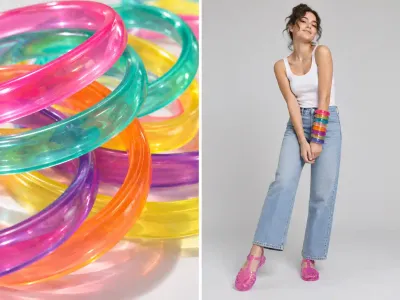
Rubber and PVC accessories - stacked bracelets in bright, often translucent colors, and jelly shoes molded from soft, flexible plastic - depend on the same basic material property: both can be cast cheaply into a huge range of shapes and colors, and both are light and durable enough to be worn in genuinely excessive quantities without real cost or physical burden. A dozen rubber bangles stacked up one forearm weigh almost nothing and cost very little individually, which is exactly what let this accessory category be worn in the deliberately over-the-top volume that defined its look.
That excessive layering is directly tied to the downtown club-scene styling Madonna brought to a mass audience - rubber bracelets stacked from wrist to elbow, worn alongside lace and crucifix jewelry, became one of the most immediately recognizable and most quickly imitated details of that whole look. Jelly shoes followed a similar path from niche, inexpensive novelty item to genuine mainstream staple, cheap enough that a teenager could own several colors at once without the investment a leather shoe would require.
I think what's genuinely interesting about this material story is how directly the accessories' cheapness enabled their exact styling logic - excess, worn casually rather than preciously, replaceable without much thought. That's a meaningfully different relationship to accessorizing than earlier decades' more considered, more expensive jewelry choices, and it fits naturally alongside this decade's broader comfort with synthetic materials doing jobs natural materials used to do, just cheaper and in far greater quantity.