The 1980s mid-1980s
Neon and Fluorescent Synthetics
Synthetic fabrics dyed in colors bright enough to seem to glow under ordinary light - a genuinely new color category that natural dyes on natural fibers simply couldn't produce convincingly.
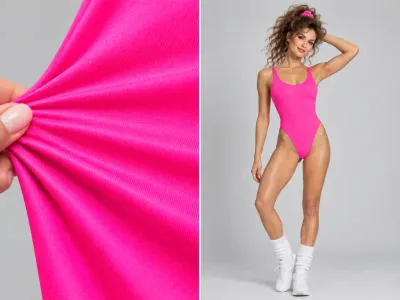
Fluorescent dye technology lets a fabric reflect more light back than falls on it in the visible spectrum, which is the actual physical mechanism behind why a genuinely neon pink or green reads as glowing rather than merely bright - it's not a subjective impression, the color is doing something a standard pigment simply can't. Applying that dye chemistry successfully needed synthetic fibers with the right chemical affinity for it; the same vividness rarely holds as well or as long on cotton or wool, which is part of why this palette shows up overwhelmingly on nylon and polyester-blend activewear rather than on natural-fiber tailoring.
That fabric-and-color combination lands squarely inside the aerobics silhouette - leotards, leg warmers, and headbands in shocking pink, acid green, and electric yellow were partly a genuine styling choice and partly a practical one, since bright synthetic colors show up clearly against studio mirrors and under gym lighting in a way that muted, natural-fiber tones don't. Jane Fonda's workout tapes and studio culture leaned into this palette hard, and it became one of the most immediately recognizable visual signatures of the whole fitness boom.
I think neon's real significance goes beyond activewear specifically - it's a color story that couldn't have existed in any previous decade covered on this site, since it depends entirely on synthetic fiber chemistry that simply didn't exist, or wasn't dye-compatible in this way, much earlier. Every other fabric on this site works within a color range natural dyes or earlier synthetics could approximate; neon fluorescents are a genuinely new entry in fashion's available color vocabulary, arriving specifically because this decade's textile chemistry made it possible.