The 1940s late war and postwar (1944-1949)
Parachute Silk
Surplus and salvaged parachutes, in silk or nylon, recut into wedding dresses, lingerie, and blouses - the decade's most romantic example of making do.
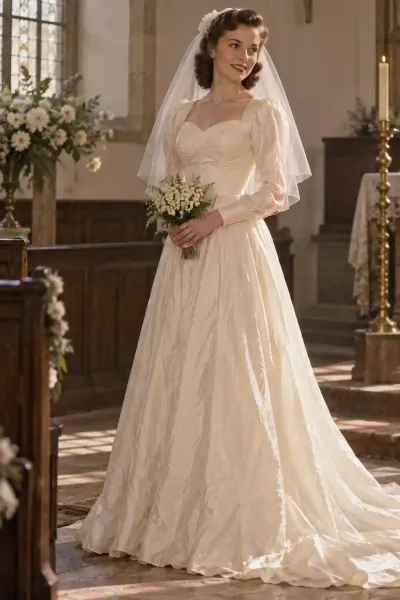
"Parachute silk" is a slightly loose phrase - early wartime parachutes were silk, but most later ones were nylon - but either way it meant the same thing to a 1940s woman: a large amount of fine, lightweight, pale fabric at a time when that was almost impossible to buy. A single parachute canopy contains a lot of cloth, cut in long tapered panels, and once parachutes started turning up as war surplus, damaged stock, or souvenirs brought home by servicemen, women found plenty of uses for them.
Lingerie, slips, nightdresses, and blouses were the everyday uses, but the one that really captures people's imagination is the parachute wedding dress. With fabric rationed and coupons scarce - see the rationing entry - a white wedding dress in new silk was out of reach for most brides, and a parachute offered enough fine white fabric for a proper long gown. Some of these dresses carry extraordinary stories. One of the best known, now in the Smithsonian's collection, was made from the nylon parachute that saved the groom's life when he bailed out of his plane during the war.
As a dressmaker, I find these dresses fascinating on a practical level too. Parachute panels are long, narrow, and shaped in triangles or gores, so the dressmaker had to plan the whole gown around the existing seams and panel shapes - sometimes keeping the original stitching as part of the design, sometimes unpicking everything and working from the pieces. It's make do and mend at its most ambitious. A parachute wedding dress is resourceful, a bit defiant, and deeply sentimental all at once, which feels like a fair summary of how a lot of people got through the 1940s.