The 1980s early 1980s
The Off-the-Shoulder Sweatshirt
A plain sweatshirt with the neckline cut wide and left to slide down one shoulder - dance-studio utility repurposed, almost overnight, into one of the decade's most copied casual looks.
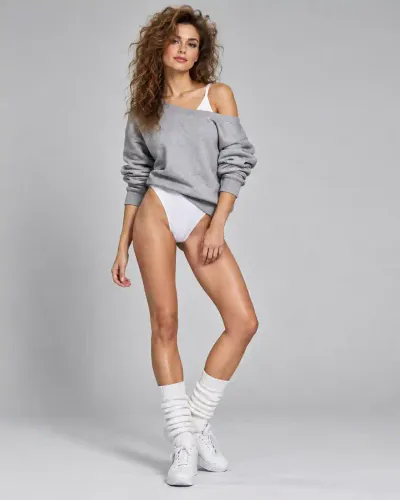
The garment itself couldn't be simpler: an ordinary cotton-fleece sweatshirt with the neckband cut away and the neckline opened up until it slides off one shoulder on its own. Everything else - the rib cuffs, the rib hem, the boxy body - stays as it was. Its fame comes from one film. Flashdance, a box-office hit in 1983, put Jennifer Beals in a sweatshirt with a ragged, wide-open neck, and the ripped-collar sweatshirt worn over leggings became, as the Golden Globes put it on the film's fortieth anniversary, a workout uniform.
The film's costumes were by Michael Kaplan, already known for Blade Runner, but the famous neckline wasn't a design-room idea at all. Beals has said in interviews that it was an accident: her sweatshirt shrank in the wash, so she cut a big hole at the top in order to keep wearing it. However the costume department finished it for filming, the look on screen is a home alteration, and that's a large part of why it spread so fast. Anyone with a sweatshirt and a pair of scissors could copy it the same evening.
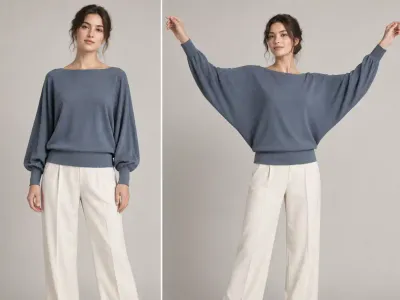
As a dressmaker I'd point out that it works better than it should. Cotton fleece is a knit, so a cut edge doesn't fray the way a woven would; it just curls slightly and softens with washing, which is exactly the ragged edge the film made fashionable. And on a sweatshirt with raglan sleeves, the sleeve seam runs diagonally right up to the neckline. Widen a raglan neck and you're cutting into the tops of the sleeves as well as the body, so the whole thing drops sideways and sits off the shoulder far more easily than a set-in sleeve would let it. The same loose, dropped line runs through the decade's batwing sleeves and slouchy sweater dresses.
The ground had been prepared by Norma Kamali, though she didn't design this garment. By 1981 she had made a whole fashion line out of grey sweatshirt fleece. The Museum at FIT owns a 1981 set from it: pull-on knickers pleated into rib-knit cuffs, and an oversized pullover tunic with a rib-knit crew neck, raglan sleeves and double-topstitched seams, all in grey heathered cotton fleece. FIT quotes the New York Times in April 1981 - "Just when you thought the influence of active sportswear on street fashion was running out of breath, along sprints Norma Kamali" - and notes that Time called it "The Hot-Selling Locker Room Look". The V&A has a pale grey brushed-cotton top and trouser suit of hers from 1982. By the time Flashdance came out, sweatshirt fabric had already been seen in fashion stores.
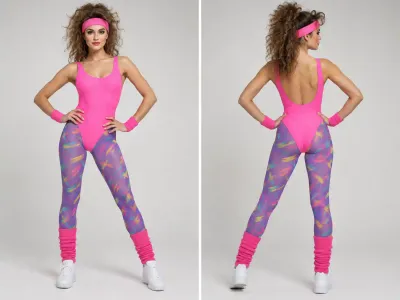
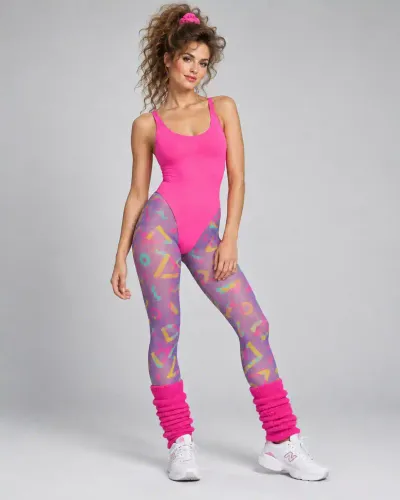
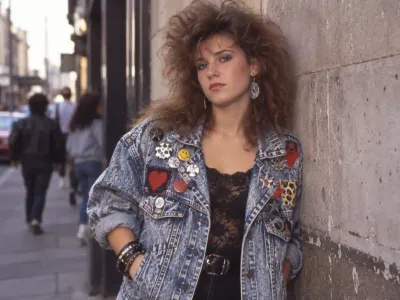
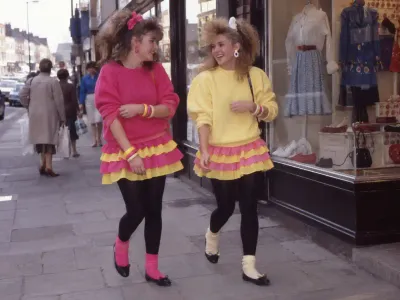
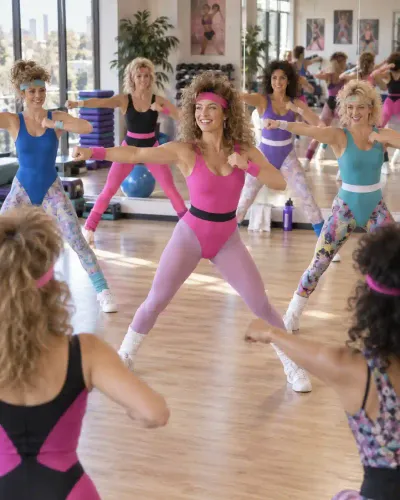
What the film added was attitude: the sweatshirt half falling off, worn by a dancer, with leg warmers not far away. It became a casual staple worn over leggings, under an oversized denim jacket or with a rara skirt, by people who had never taken a dance class, and it led straight into the aerobics silhouette and Jane Fonda's workout boom. Few garments this decade travelled from rehearsal clothes to mass-market casual wear quite so fast, or with so little change along the way.