The 1980s throughout the 1980s
Stretch and Spandex Construction
Building a garment from fabric that does the fitting work itself, rather than from darts, boning, or precise pattern-cutting - a genuinely different relationship between cloth and body than most tailoring assumes.
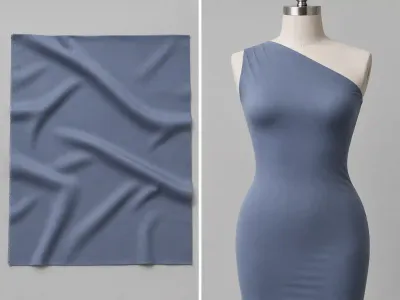
Conventional close-fitting construction - darts, boning, a precisely cut waist seam - achieves its fit by cutting rigid or semi-rigid fabric into a shape that matches a specific body's measurements exactly, and it only fits well at the measurements it was cut for. Stretch construction, built around spandex and Lycra blends, works from an entirely different premise: cut the fabric generously smaller than the body it's meant to cover, and let the fiber's own elasticity do the actual fitting as it stretches to meet the wearer's shape and moves with them afterward.
That shift changes what a pattern-maker is actually solving for. A dart exists to remove excess fabric so cloth follows a body's curve without folding; a stretch knit needs no dart at all, because the fabric itself follows the curve by stretching rather than being shaped to it in advance. The bodysuit is close to the purest expression of this - a nearly flat pattern, minimal seaming, entirely reliant on the knit's own stretch and recovery to produce a close, body-skimming fit through actual movement rather than only while standing still.
I think this construction approach is genuinely one of the more significant shifts in this whole site's pattern-cutting history, on par with the A-line's earlier move away from waist-seam shaping - it's not a stylistic choice so much as an entirely different theory of how fabric and body are supposed to relate to each other. Everything the aerobics silhouette does depends on this construction logic working correctly; take the stretch fiber out and the whole silhouette simply stops functioning as intended.