The 1970s early-to-mid 1970s
The Maxi Dress
The full-length dress that outlasted the midi's disastrous launch and the mini's dominance both, moving from boho staple to genuine eveningwear by mid-decade.
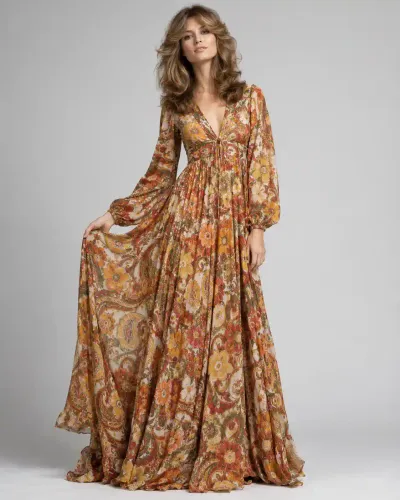
The maxi dress owes its early-70s dominance partly to a rival hemline's actual failure, which is a more interesting story than most garment entries get to tell. 1970 is the year the fashion industry pushed the calf-length midi skirt hard as the mini's official successor, and consumers largely refused to buy it - a genuinely well-documented revolt, covered in the midi skirt backlash entry, that left retailers with unsold midi stock and the industry considerably less confident about dictating hemlines from the top down. The maxi, floor-length rather than the midi's awkward mid-calf compromise, sidestepped that whole argument and kept both the mini and full-length dressing viable at once rather than forcing women into a single "correct" length.
Early maxi dresses lean heavily boho - loose through the body, often in cheesecloth or gauze, with peasant-blouse sleeves or a smocked bodice, worn as daywear as much as anything dressier, part of the same broader bohemian/prairie silhouette running through the early decade. What's worth tracking is how the garment cleans up as the '70s move on: by mid-decade a maxi dress is just as likely to show up in a slinkier jersey or a print built for evening as in cheesecloth, worn to dinner or a party rather than as loose daytime dressing - the length stays constant while the fabric and cut do the work of moving the dress from one register to a completely different one.
That range is really the case for treating the maxi as its own entry rather than folding it entirely into the boho silhouette it started under: very few garments in this decade cover as much ground, functionally, as full-length dressing does here - equally at home as a hippie-inflected daytime staple and, a few years later, as a genuinely glamorous evening piece, without the basic silhouette ever really changing. I think that flexibility is underrated as a reason it had the staying power the midi so conspicuously lacked.