The 1970s 1970s
Bell-Bottoms
Flared-leg trousers that moved from naval uniform to hippie signifier to full mainstream denim staple, worn by pretty much everyone by mid-decade.
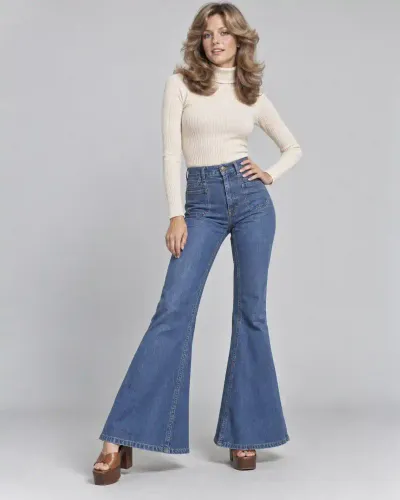
Bell-bottoms have a genuinely odd origin story for how thoroughly countercultural they read by the early 1970s: the flared leg comes from naval uniform trousers, cut wide at the hem partly so sailors could roll them above the knee for deck-swabbing and pull them off over boots without untying anything. That's a practical, unglamorous starting point for a garment that ends up as one of the decade's defining youth-fashion signifiers.
The route from naval surplus to street fashion runs through the 1960s counterculture and mod scenes, where the flare got exaggerated well past anything a uniform regulation would have allowed, and by the early '70s the silhouette had detached almost entirely from its military source. What's worth sitting with is how fast bell-bottoms crossed from a specifically youth-rebellion signal into something closer to a wardrobe default - by mid-decade they weren't reading as a statement so much as simply what trousers looked like, worn by teenagers and their parents both, in denim for daily wear and in dressier fabrics for anything nicer. That's a genuinely fast normalization for a silhouette that started out as a pointed rejection of a straight-leg, buttoned-up mainstream.
The other detail worth naming is how unisex the garment actually was in practice, which wasn't true of most of the decade's other major silhouettes. Bell-bottoms turn up on men and women in close to identical cuts through most of the '70s, which fits into a broader loosening of gendered dress codes running alongside the decade's real shifts in women's working lives - the same decade producing bell-bottoms as an everyday unisex staple is also producing a lot of genuine anxiety and negotiation over what women should wear to a white-collar job. The trouser itself is a small, casual example of a much bigger story: clothing that didn't obviously code as "menswear" or "womenswear" first became genuinely easy to find on department store racks in this decade, and bell-bottoms were probably the single most common example of it.