The 1970s 1973-1979
Separates and Mix-and-Match Construction
Ready-to-wear pattern design shifts toward genuinely interchangeable pieces - blazers, vests, trousers, and skirts drafted and dyed to coordinate rather than sold as a single fixed outfit.
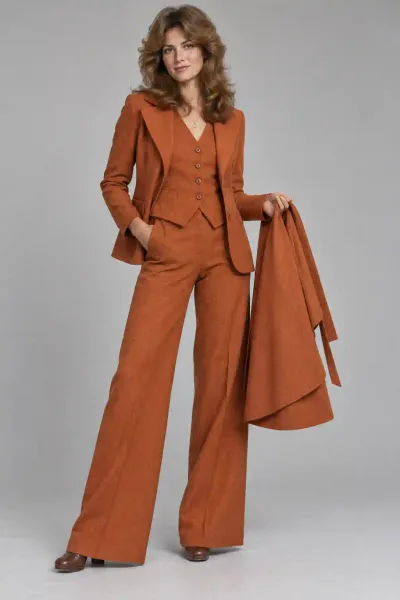
A "coordinate group" isn't a new idea by the 1970s - sportswear separates go back at least to the 1930s and get a huge boost from Claire McCardell's work in the '40s and '50s. What genuinely changes through this decade is the scale and deliberateness of it as a manufacturing strategy, specifically aimed at a wardrobe question a growing number of women were actually asking: how do I own fewer pieces that still cover office, errand, and evening without buying a whole new outfit for each.
The construction and manufacturing logic behind that is more involved than it looks on a rack. A genuine mix-and-match line is drafted so a blazer, vest, skirt, and trouser are all cut to sit at compatible proportions - waist seams landing at the same height, jacket length calibrated against skirt length, sleeve and hem details restrained enough not to clash across pieces - and, just as importantly, dyed from controlled fabric lots so a navy jacket bought in March actually matches a navy skirt bought in September, which sounds trivial until you've dealt with dye-lot variation between production runs. Manufacturers built entire seasonal lines this way by the mid-1970s, often four or five core pieces designed from the outset to generate a dozen-plus outfit combinations rather than four or five fixed looks, which is a real shift in how a garment company's design and cutting room planned a season - patterns were being drafted with an eye toward what else was in the line, not just how one piece looked on its own hanger.
The demand side of this is where dressing for work comes in directly - more women entering white-collar offices through the decade needed a work wardrobe that read as professional and varied on a real budget, and separates solved that more efficiently than single dresses ever could, since three coordinating pieces multiply into far more outfits than three dresses ever will. I think that's the actual argument for treating this as a construction entry and not just a marketing one: getting separates to genuinely interchange took real drafting discipline and production planning, and the fact that a woman could build a working wardrobe out of a handful of correctly coordinated pieces by the end of the decade is a manufacturing achievement sitting quietly underneath what looks, from the outside, like a simple styling trend.