The 1970s late 1970s
Punk Rock and Anti-Fashion
London punk set out to reject the fashion industry outright - safety pins and ripped fabric as genuine refusal - and then watched that refusal get absorbed and resold within a couple of years.
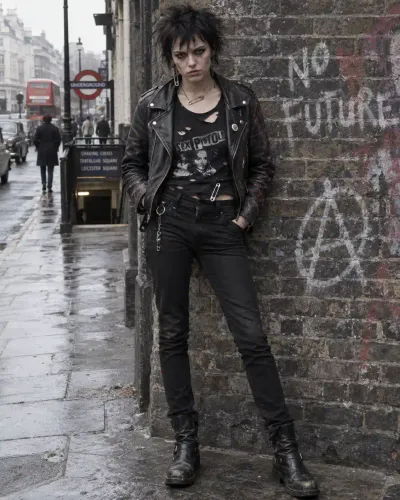
I think punk is the most interesting culture entry in this whole section precisely because it started as a genuine rejection of everything "fashion" was supposed to mean, and I want to sit with that before getting to the part where it stopped working. The scene crystallized around London's King's Road in the mid-70s - the Sex Pistols as its most visible musical export, but the actual visual language coming out of a single shop at 430 King's Road that changed names across the decade (Let It Rock, then Too Fast to Live Too Young to Die, then SEX, then Seditionaries), run by Malcolm McLaren and Vivienne Westwood.
What made it "anti-fashion" rather than just a new fashion trend was the intent behind the garments themselves: deliberately ripped t-shirts held together with safety pins instead of stitching, bondage trousers borrowed straight from fetish wear, chains, razor blades and slogans as jewelry and print, clothes that were often literally defaced - spray-painted, safety-pinned, slashed - rather than manufactured to look that way. That distinction matters. Early punk dress was closer to a genuine DIY refusal of the entire premise that clothing should be well-made, flattering, or purchased new than it was to any recognizable fashion statement, and that's covered in more construction-level detail in the punk silhouette entry.
The part I think is genuinely worth sitting with, though, is how fast the industry it was rejecting turned around and sold it back. Zandra Rhodes's 1977 "Conceptual Chic" collection put hand-finished safety pins and elegantly torn silk jersey on a couture runway within roughly a year of the same imagery being genuinely transgressive on the King's Road - and by extension, so did every subsequent designer who's since put "punk" on a runway as a seasonal reference rather than a lived refusal. I don't think that absorption erases what the original gesture meant; if anything it's the clearest example in the whole decade of how quickly an anti-fashion statement can become fashion vocabulary the moment it's photographed and reproducible, which is a pattern that's really never stopped repeating since.