The 1970s early 1970s
The Peasant Blouse
A loose, full-sleeved blouse borrowing from Eastern European and Mexican folk dress - the boho staple that anchored countless early-70s outfits.
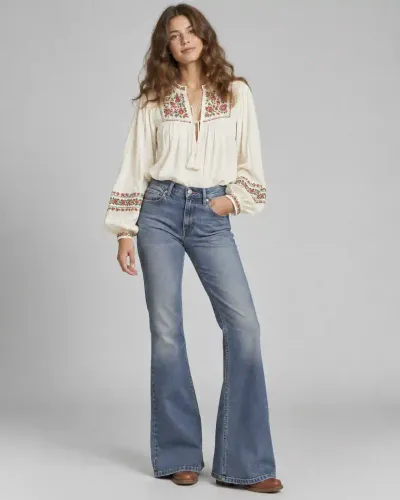
The peasant blouse is one of those garments where the name is doing real historical work rather than just describing a vibe - it's a direct, fairly literal borrowing from the loose, full-sleeved, often smocked or embroidered blouses worn as everyday dress in Eastern European and Mexican folk costume for generations before American and European fashion picked the shape up and put it on department store racks.
Construction-wise it's a genuinely simple garment: a gathered or smocked neckline, often finished with drawstring ties instead of buttons, full sleeves gathered at the wrist or left loose, cut with enough ease through the body that it doesn't rely on darts or a fitted seam to hold its shape. That simplicity is exactly what made it so easy to produce cheaply and so easy to make at home, which mattered - a huge amount of early-70s peasant-blouse wearing happened via home sewing patterns and embroidery rather than store purchases, part of the same DIY instinct running through the decade's broader home-sewing culture. Laura Ashley built a real commercial identity around a cleaned-up, more market-ready version of the same basic shape, usually in her signature small florals rather than the more overtly folk-embroidered originals.
Worn tucked into bell-bottoms or left loose over a maxi skirt, the peasant blouse is really the connective tissue piece of the whole early-decade bohemian/prairie silhouette - it's rarely the garment anyone remembers first, but it's in nearly every outfit photograph from the period, because it's the piece that made the rest of the look read as intentional rather than just loose and shapeless. I think that's worth noting honestly alongside the aesthetic appeal: this is also one of the clearer examples of Western fashion lifting a specific, living folk-dress tradition and flattening it into a general "peasant" marketing category, stripped of the regional and cultural specificity it actually came from - a tension that runs through a lot of the era's borrowing, not just this one blouse.