The 1960s late 1960s
The Counterculture and the Hippie Movement
Anti-war protest, the rise of psychedelic drug culture, and a rejection of mainstream consumer values pushed the decade's closing years towards a silhouette that looked nothing like its opening ones.
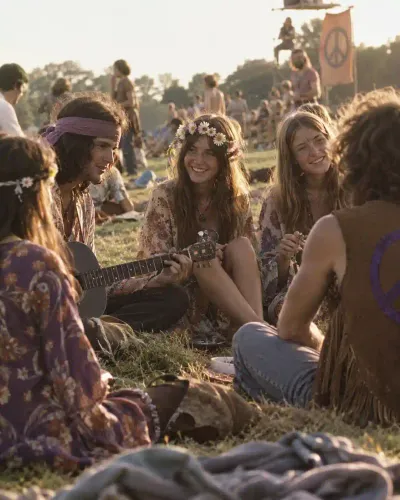
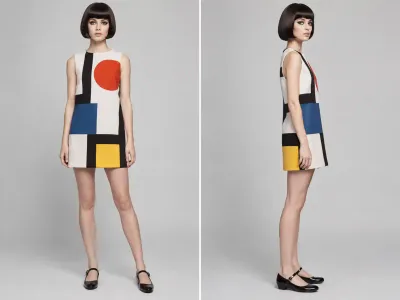
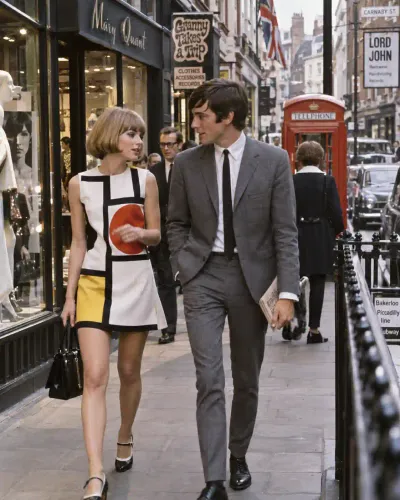
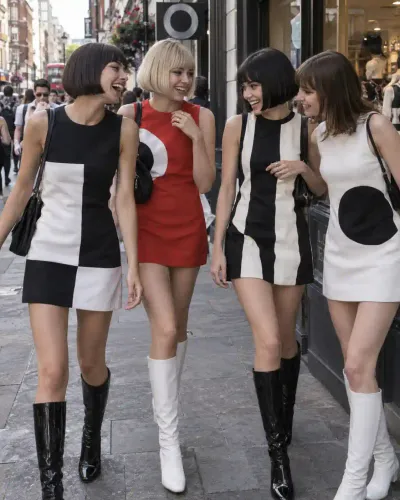
By the "Summer of Love" in San Francisco in 1967, the decade's youth culture had moved a long way from the mod scooters and geometric minis of just a few years earlier, and the shift was driven by more than a change in taste. Escalating opposition to the Vietnam War, psychedelic drug culture and its effect on music and graphic art, and an open rejection of consumerism and materialism together produced a youth movement that wanted its clothes to look nothing like the polished, engineered "young fashion" of 1965.
The summer had a clear starting gun. On 14 January 1967 more than 20,000 people gathered in Golden Gate Park for the "Human Be-In," where Timothy Leary told them to "turn on, tune in, drop out." The coverage, as PBS's American Experience tells it, sent thousands of young people flooding into the city over the following months, and those who reached the Haight-Ashbury found a neighbourhood where free love and free clothing were the norm - the Free Store simply gave clothes away. That summer Scott McKenzie's "San Francisco (Be Sure to Wear Flowers in Your Hair)" was on top-40 radio, and on 6 October residents tired of the commercialisation marched along Haight Street in a mock funeral for the "death of hippie." The whole arc, from Be-In to self-declared funeral, took under nine months.
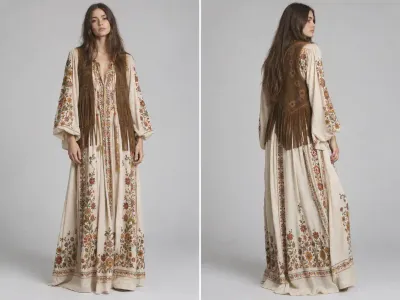
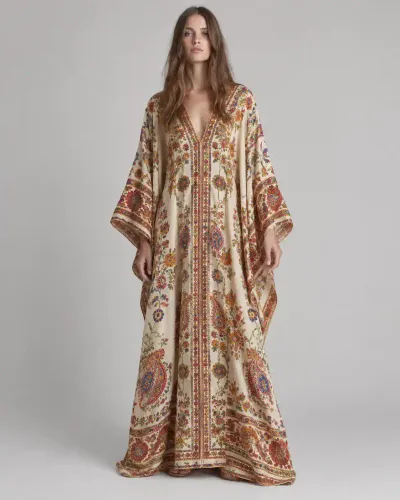
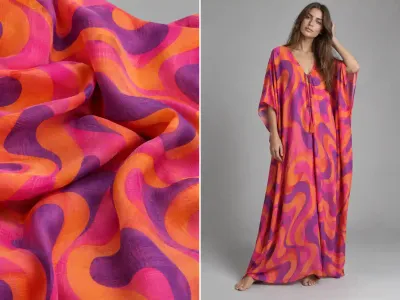
The wardrobe consequences run through several entries here: the loose hippie silhouette, the borrowed kaftan, and the swirling, poster-derived psychedelic prints. What ties them together is a rejection of what mod and Space Age dressing had prized - polish, engineering, synthetic newness - in favour of natural fibre and secondhand or handmade clothing. Irving Penn was already photographing the city's hippies by September 1967; his Hippie Family portrait of a woman, a man and a baby is now in the V&A. The handmade side survives in real detail. The de Young museum's 2017 Summer of Love exhibition showed a leather and suede vest with rivets and metalwork that Linda Gravenites made for Lenore Kandel around 1969, and a suede cape with leather appliqués, hand-laced in cordovan and cross stitches, that she made for Bill "Sweet Willie Tumbleweed" Fritsch - one-off pieces, made by a woman for people she knew. That's close to the opposite of a boutique rail, and to a dressmaker it's the most radical thing about the movement.
London's version was more shop-bound. The V&A's Afghan coat of embroidered goatskin was bought at Oxus on the King's Road, and the museum's 1994 Streetstyle exhibition dressed it as "Hippy UK/American 1966." FIT's Fashion History Timeline puts mod and hippie dressing in the same new model of "street style," fashion moving from the street up to designers - the youthquake logic again, this time with an explicit politics attached.
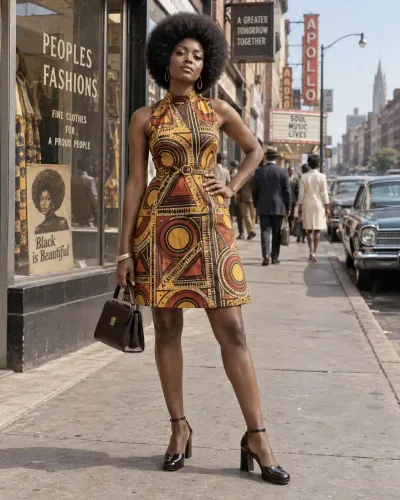
I'd be careful, though, about calling this the decade's first case of politics driving fashion directly. The Black is Beautiful movement had been staging fashion shows with a stated political programme in Harlem since 1962. What the counterculture did was turn political dressing into a mass youth style, and by the 1969 Woodstock festival at Bethel, New York, the look was everywhere. The throughline into the next decade is direct rather than metaphorical: readers who've spent time in the 1970s section will recognise the same silhouette, fabric palette and values in its early bohemian and prairie dressing, in the fringed suede and patchwork and home sewing of its first years, and a little later in its back-to-nature movement. This entry is where that multi-decade thread begins.
Sources
- "When the 'Summer of Love' Took Over San Francisco" - American Experience, PBS
- "Free Love & Free Stuff" - American Experience, PBS
- Irving Penn, Hippie Family, San Francisco, September 1967 - V&A Collections
- Installation view of "The Summer of Love Experience" (de Young museum, 2017): Linda Gravenites vest and cape - Google Arts & Culture
- About Bethel Woods Center for the Arts, site of the 1969 Woodstock festival - Bethel Woods Center for the Arts
- Coat, Oxus, 1960s, embroidered goatskin - V&A Collections
- Karina Reddy, "1960-1969" - Fashion History Timeline, Fashion Institute of Technology