The 1990s early-to-mid 1990s
Rave Culture
All-night dance parties in warehouses and fields, acid house smileys, baggy clothes built for dancing, neon and mesh - the youth movement that grew out of 1988's 'Second Summer of Love' and shaped streetwear through the 1990s.
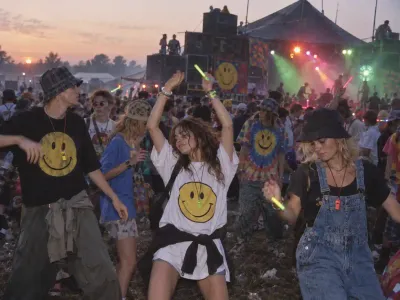
Rave culture was the biggest youth movement in Britain at the turn of the 1990s, and its influence spread across Europe and North America during the decade. It was built around electronic dance music and huge, all-night parties, and it created a distinctive style based on one simple need: being able to dance for hours.
It grew out of the acid house scene of the late 1980s. In 1988 and 1989, often called the "Second Summer of Love," young people in Britain went to illegal parties in warehouses, aircraft hangars, and fields, dancing to house and techno music. The yellow smiley face became the symbol of the scene. Through the early 1990s, the parties grew bigger, sometimes drawing thousands of people, and the authorities responded: in 1994, the Criminal Justice and Public Order Act gave police powers against outdoor gatherings with music "wholly or predominantly characterised by the emission of a succession of repetitive beats." Much of the scene moved into licensed superclubs.
The clothes were practical and playful. Dancing all night in hot, crowded spaces called for loose, comfortable clothes: baggy T-shirts and jeans, tracksuits, dungarees, and later cargo pants and very wide-legged trousers. Early ravers loved bright colours, smileys, and tie-dye, and bucket hats and bandanas were common. As the decade went on, club wear became more glamorous and futuristic, with mesh tops, fluorescent and metallic colours, platform trainers, and accessories like glow sticks and whistles. Outdoor raves in cold weather brought fleece and sportswear into the mix.
Rave style was deliberately unisex and unpretentious. There was little focus on looking sexy or smart; the point was comfort, fun, and belonging. That had a lasting effect on fashion. Rave helped make sportswear and casual clothing acceptable for nights out, and its love of neon, tech fabrics, and futuristic details fed directly into the Y2K silhouette.
I should mention that drugs, especially ecstasy, were part of the scene, and there were deaths and serious harm connected with them, which drove much of the public anxiety about raves. But I think rave culture's fashion legacy is significant: it's one of the moments when what young people wore to dance reshaped everyday clothes, much as disco had done a generation before.